
Can Termites Live in Power Poles? Sydney Tips
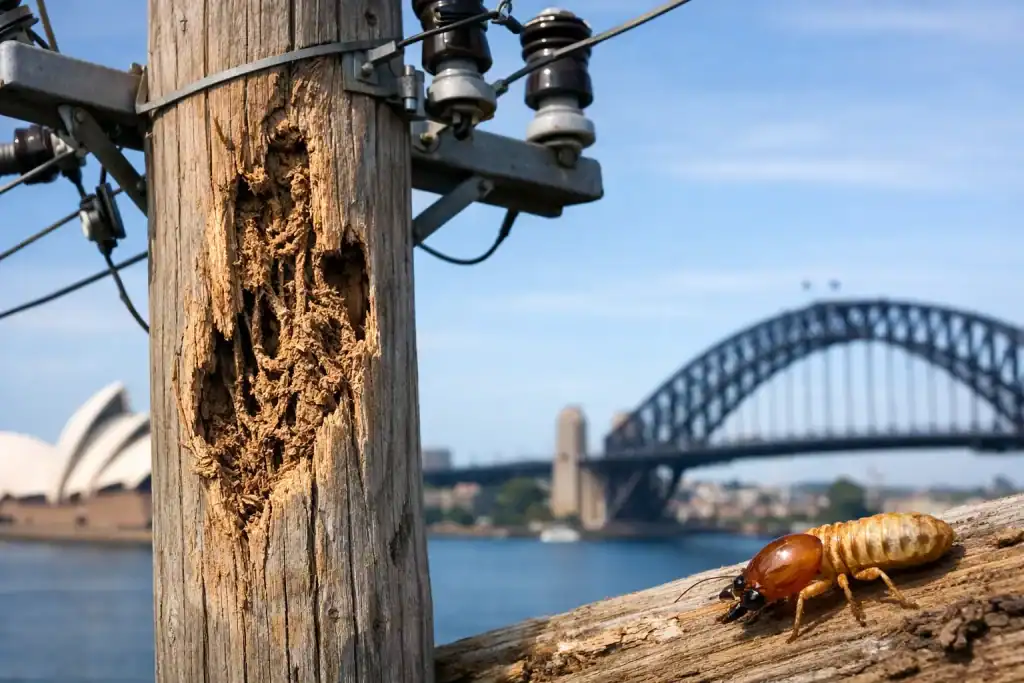
If you have spotted termite damage in a timber power pole on your street, the question that follows is usually immediate and a bit unsettling: can termites live in power poles? What Sydney homeowners should know is that they absolutely can, and that nearby pole activity is worth taking seriously – not because termites will leap across the road, but because it may point to a wider colony active in the area.
That matters in Sydney, where warm conditions, moisture, ageing timber and established gardens can all create a favourable environment for termites. A power pole with termite damage is not automatically a sign your home is under attack. It is, however, a reminder that termites do not care whether timber is structural, decorative or part of public infrastructure. If it contains cellulose and stays damp enough, it can become a food source.
Can termites live in power poles?
Yes. Termites can and do live in timber power poles, especially older poles that have been exposed to moisture over time. From a termite’s point of view, a power pole is simply another large piece of timber in contact with the ground or close to it. That makes access easier for subterranean termites, which are the species most Sydney homeowners need to worry about.
These termites usually travel through soil and mud shelter tubes so they can stay humid and protected from light. Once they reach suitable timber, they can feed from the inside out. In a power pole, that can mean internal hollows and hidden structural weakening long before obvious surface damage appears.
Not every power pole is timber, and not every damaged pole has active termites. Some poles are concrete, steel or composite materials. Others may be timber poles that have already been treated or replaced. So if you notice a damaged pole, the important point is not to diagnose it yourself from the footpath. The real issue for homeowners is what that local activity suggests.
What a termite-affected power pole means for nearby homes
A termite colony is not limited to one food source. If termites are feeding on a power pole, they may also be feeding on tree stumps, retaining walls, fences, landscaping timbers or a home nearby. Colonies can forage across surprisingly large areas in search of cellulose and moisture.
That is why a termite-affected pole should be treated as a local warning sign rather than a curiosity. It does not prove your house has termites. It does mean the conditions in your suburb, street or immediate block may support termite activity.
In parts of Sydney with older homes, leafy gardens and mixed construction materials, that risk can be higher than many owners realise. Timber decking, subfloors, pergolas and boundary fencing can all act as stepping stones, particularly where drainage is poor or timber sits too close to soil.
Why termites are attracted to some poles and not others
Moisture is usually the deciding factor. Even treated timber becomes more vulnerable when protective barriers break down and the pole stays damp. Water can enter through cracks, ground contact, poor drainage or repeated weather exposure.
Age also plays a role. Older timber poles may have natural wear, splits and softened sections that make entry easier. Termites are opportunistic. They do not need pristine conditions. They just need concealed access and timber with enough moisture content to support feeding.
The same logic applies to homes. A house with leaking plumbing, poor ventilation under the floor, garden beds against external walls or stored timber under the house will usually be at greater risk than a well-maintained property with good drainage and separation from soil.
What Sydney homeowners should know about termite spread
One of the biggest misconceptions is that termites spread like ants, moving directly from one visible object to the next in plain sight. In reality, subterranean termites move more quietly. They travel underground, through cracks, behind walls and inside shelter tubes. You often do not see the insects themselves until damage is well advanced.
So if you are wondering whether termites in a nearby power pole will come straight into your house, the answer is: it depends. Distance matters. Construction type matters. Moisture matters. Existing barriers or previous treatments matter too.
A home on a concrete slab with good drainage and no timber-to-soil contact presents a different risk profile to an older house with a damp subfloor and garden sleepers touching the exterior. That is why a proper termite inspection is more useful than guesswork. It assesses actual risk on your property, not just general concern based on what is happening down the street.
Signs your home may be vulnerable after nearby termite activity
You do not need to panic if a power pole in the area has termites, but you should pay attention to your own property. Early signs are often subtle. You might notice mud tubes on brickwork, piers or subfloor timbers. You may see blistering paint, warped skirting boards, tight-fitting doors or hollow-sounding timber.
In some cases, there are no obvious signs at all. That is part of what makes termites so costly. They work behind surfaces, inside wall cavities and under floors where damage can build unnoticed.
Outdoor structures can offer clues before the house does. A fence post that crumbles easily, a retaining wall with soft timber, or an old stump showing tunnelling can all indicate termite pressure in the yard. These findings do not replace an inspection, but they do justify one.
What to do if you suspect termites in a power pole near your property
First, report the pole to the relevant utility authority rather than approaching or disturbing it. A damaged power pole is a safety issue as much as a pest issue. Do not knock on it, cut into it or try to spray it yourself.
Second, arrange a termite inspection for your own property if you have concerns. This is the practical step that helps you move from worry to facts. A thorough inspection looks at accessible areas of the home, subfloor, roof void, garden timbers and likely entry points. It also considers conditions that may attract termites, such as dampness and timber contact with soil.
For families, pet owners and property managers, this is where choosing an environmentally responsible pest professional matters. The goal is not just to find termites, but to manage risk in a way that protects people, pets and surrounding wildlife wherever possible.
Can termite treatment on your home help if the source is nearby?
Yes, but treatment should be matched to the property and the level of risk. If termites are found in the home, active management is needed. If no termites are found but conditions are favourable, prevention may still be the smartest option.
This can include addressing moisture problems, improving ventilation, removing timber offcuts, separating garden beds from external walls and replacing high-risk landscaping materials. In some cases, a termite management system or targeted treatment is appropriate. In others, regular inspections may be enough.
There is no one-size-fits-all answer, and honest advice matters here. Overservicing helps no one. The right approach depends on construction type, site conditions, past history and whether there is confirmed activity on the property.
Why regular inspections matter more than street-level sightings
A visible problem in a power pole is only one piece of the picture. Termites may be active in an area long before anyone notices public infrastructure damage. They may also be absent from your home even when they are present nearby.
That is why regular inspections remain the most reliable safeguard for Sydney homes. They help catch issues early, identify conducive conditions and reduce the chance of expensive structural damage. For higher-risk properties, especially older homes or houses with significant timber features, routine checks are part of sensible home maintenance.
At Clean & Green Pest Control, we often speak with homeowners who assumed they would see termites before serious damage occurred. Unfortunately, that is rarely how it works. Termites are secretive, persistent and very good at staying hidden.
If there is one practical takeaway, it is this: a termite-affected power pole should prompt awareness, not alarm. Use it as a reason to check the conditions around your home, stay on top of maintenance and book a professional inspection if you are due. Peace of mind is far easier and far less costly to manage before termites make themselves comfortable where you live.