Office Pest Control Sydney for Safer Workplaces
A single cockroach in the kitchen or a line of ants across the reception desk can change how people feel about your business in seconds. Effective Office Pest Control Sydney is not just about removing a visible pest problem. It protects staff wellbeing, food areas, equipment, compliance obligations and the reputation you have worked hard to build.
For offices across Sydney, pest management needs to be practical and discreet. Treatments should fit around working hours, reduce unnecessary chemical exposure and address the conditions that attracted pests in the first place. A spray-and-go approach may provide short-term relief, but it rarely delivers the lasting protection a busy workplace needs.
Why office pests need prompt attention
Pests do not recognise the difference between a warehouse, a café kitchen and a corporate office. They are looking for food, water, warmth and quiet places to shelter. Crumbs beneath desks, overflowing kitchen bins, leaking taps, cardboard storage and gaps around pipes can all create an inviting environment.
Cockroaches, ants, rodents, flies and spiders are among the most common office pests in Sydney. Each creates a different risk. Cockroaches and rodents can contaminate food preparation areas, while flies make kitchens and meeting rooms unpleasant. Rodents can chew cables, damage stored supplies and leave droppings in ceiling voids or behind furniture. Ant trails may seem minor, but they often point to a nest nearby or an ongoing access issue.
The business impact can be larger than the pest itself. Staff may feel uncomfortable eating in the office kitchen, visitors may question cleanliness, and facilities teams can lose valuable time managing repeat complaints. For food businesses, medical practices and childcare-adjacent workplaces, a pest issue may also create more serious hygiene and compliance concerns.
Office pest control in Sydney starts with inspection
The right treatment depends on what is happening in your workplace. A professional inspection should identify the pest species, the likely nesting or harbourage areas, the entry points and the conditions sustaining the activity. This matters because a treatment for German cockroaches in a kitchenette is very different from a rodent issue in a loading area or ants entering through a ground-floor window.
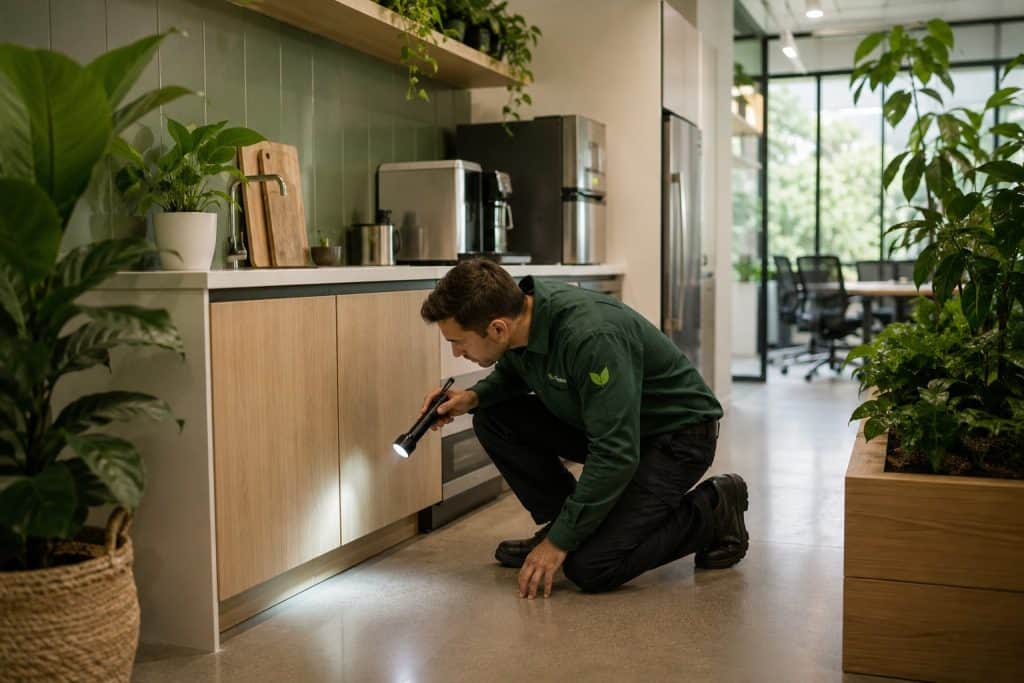
An experienced technician will look beyond the obvious. That can include checking under sinks and appliances, inside cupboards, around plumbing penetrations, in ceiling spaces where accessible, near rubbish areas and around exterior doors. They should also ask useful questions: when were pests first noticed, where are sightings most common, has the building had water damage, and are neighbouring tenancies experiencing similar issues?
This investigation avoids unnecessary treatment and helps create a plan suited to your office layout, operating hours and the presence of staff, clients or visitors. In multi-tenancy buildings, it can also reveal when pest activity may be moving between suites, common areas, bin rooms or service ducts.
Common office pest problems and what causes them
Cockroaches in kitchens and break rooms
Cockroaches are often most active at night, so staff may only see one or two during the day. Daytime sightings can indicate a larger population or disturbed harbourage nearby. Kitchenettes provide everything they need: food residue, moisture, warmth behind fridges and dishwashers, and tight gaps around cupboards.
The most effective response combines targeted treatment with better sanitation and moisture control. Cleaning benches matters, but so does removing crumbs from toaster trays, wiping spills promptly, emptying bins regularly and reporting leaking taps. Chemical-heavy fogging is not automatically the best option in an occupied office. Targeted gels, low-tox products and carefully placed monitoring tools can often manage activity with less disruption when used as part of a tailored program.
Ants around desks, kitchens and entry points
Ants commonly enter offices in warmer months, following scent trails towards sweet spills, food bins and staff lunches. Spraying the ants that are visible may interrupt the trail temporarily, but it does not necessarily reach the colony.
A proper treatment focuses on identifying the species and using a suitable baiting or targeted control method that can be carried back to the nest. Staff can help by keeping food in sealed containers and avoiding the habit of leaving fruit, biscuits or takeaway containers on desks overnight.
Rodents in storage areas and ceiling voids
Rats and mice can enter through surprisingly small gaps. Offices near restaurants, construction sites, landscaped areas, laneways or shared rubbish facilities can be especially vulnerable. Signs include droppings, gnaw marks, shredded paper, strange odours, noises after hours and damaged food packaging.
Rodent control should never be limited to placing bait. Exclusion is essential. Sealing gaps around pipes, fitting door sweeps, repairing damaged vents and keeping storage off the floor reduce future access. Where baiting is required, it should be managed responsibly, with the safety of staff, pets, children visiting the workplace and local wildlife considered at every step.
Flies, spiders and occasional invaders
Flies are often linked to bins, food waste, drains or open doors, while spiders may move indoors seeking shelter or following insect activity. These problems can be seasonal, but recurring sightings should still be investigated. The aim is to reduce the source and access points, rather than treating every spider or fly sighting as an isolated event.
A safer approach for occupied workplaces
Office pest management should account for the people using the space every day. That means selecting treatments based on the pest, the location, the level of activity and who may be exposed. There is no one treatment that suits every office.
Environmentally responsible pest control prioritises targeted applications, plant-derived or low-tox options where appropriate, and non-chemical measures such as proofing, hygiene improvements and monitoring. These methods can reduce unnecessary chemical use without compromising on effective pest eradication.
There are situations where stronger products or more intensive treatment may be necessary, particularly with established infestations. In those cases, clear communication is vital. Your provider should explain what will be used, where it will be applied, any preparation required and when staff can safely return to treated areas. A good plan is transparent, not mysterious.
Prevention measures your office can keep up
The best prevention routine is one your team can realistically maintain. It does not need to turn staff into pest controllers. Small, consistent actions make the biggest difference:
- Keep food in sealed containers and clear desks before weekends or public holidays.
- Empty kitchen and desk-side bins regularly, especially where food scraps are present.
- Clean toaster trays, coffee machines, microwaves and fridge spills as part of normal kitchen routines.
- Report water leaks, drain odours, damaged door seals and cracks around services promptly.
- Store paper, stock and archived files off the floor and away from walls where possible.
- Keep external rubbish and recycling areas tidy, with lids closed and spills removed.
Property managers and office managers should also consider what happens outside the tenancy. Shared bin rooms, landscaped gardens, loading docks and neighbouring food outlets can influence pest pressure inside the building. Where the source sits in a common area, the solution may require coordination with strata management or building maintenance.
When recurring treatments make sense
A one-off service can be suitable for a minor, isolated issue, such as seasonal ants or a small number of spiders. Recurring pest management is often the better choice for offices with kitchens, high foot traffic, food storage, ground-floor access, older buildings or a history of cockroach and rodent activity.
Scheduled visits allow for ongoing monitoring, early intervention and adjustments as conditions change through the year. They can also make budgeting simpler and reduce the chance of a small issue becoming a disruption that demands urgent action. For businesses where cleanliness is highly visible to customers, prevention is generally more cost-effective than reacting after pests are seen.
What to expect from a professional office pest service
A reliable provider should respect that your workplace needs to keep functioning. Before the visit, you should know the expected arrival window, any preparation required and whether particular areas need to be temporarily cleared. After treatment, you should receive straightforward advice on what was found, what was done and what your team can do next.
Ask whether the technician can tailor timing to minimise disruption, such as early morning, late afternoon or quieter operational periods. Ask how they protect sensitive areas including kitchens, server rooms, records storage and spaces used by staff with allergies or health concerns. If your office has pets on site, visiting children or nearby native wildlife, mention this before treatment so the plan can be adapted.
Clean & Green Pest Control takes this practical, safety-first approach seriously: identifying the source, choosing responsible treatments and giving workplaces clear advice that supports long-term prevention. The goal is simple – a cleaner, safer office where staff can focus on their work rather than what is crawling behind the kitchenette fridge.