
A Guide to Termite Inspection Process
You usually do not think about termites when everything in the home looks fine. That is exactly why inspections matter. A proper guide to termite inspection process helps you understand what is being checked, what can be found before major damage sets in, and why a thorough inspection is one of the smartest preventative steps for any property owner.
Termites are quiet, persistent and expensive when missed. In many Sydney homes, especially where there is garden moisture, timber landscaping, subfloor access or ageing structures, activity can build for months before there are obvious signs. By the time a door frame sounds hollow or skirting starts to blister, the damage may already be well advanced.
Why the termite inspection process matters
A termite inspection is not just a quick look around for insects. It is a methodical assessment of the property, the building conditions that can attract termites, and any signs that suggest current activity, past activity or a higher future risk.
That distinction matters. Sometimes an inspection finds live termites. Other times it reveals moisture issues, timber-to-soil contact, poor drainage or hidden entry points that make an infestation more likely. In practical terms, a good inspection gives you answers, but it also gives you a plan.
For families, landlords and property managers, that plan is often where the real value sits. It helps you act before structural repairs become a much bigger problem.
Guide to termite inspection process: what happens first
The process starts before the technician even opens a tool bag. A quality inspector will usually ask a few questions about the property history, whether you have seen mud leads, soft timber, winged termites, moisture issues or previous treatments, and whether there are known access limitations.
This early conversation is simple but useful. It helps focus attention on vulnerable areas and gives context. A home with recent plumbing leaks, blocked subfloor vents or heavy garden beds against external walls presents different risks from a newer, well-cleared property.
The inspection itself then moves through the accessible parts of the building and surrounding areas in a systematic way. That includes both the structure and the conditions around it.
External inspection areas
Outside, the inspector is looking for signs of termite entry and the environmental conditions that support activity. This often includes external walls, weep holes, garden edging, tree stumps, retaining timbers, fences, decking, pergolas and any stored timber.
They will also assess whether soil or mulch is bridging the slab edge, whether drainage is poor, and whether there are damp spots near the home. Termites are strongly drawn to moisture, so even a small issue such as a dripping tap or overflowing air conditioning drain can increase risk over time.
In coastal and leafy suburbs, where gardens are common and humidity can sit higher, these outside conditions are often a major part of the termite picture.
Internal inspection areas
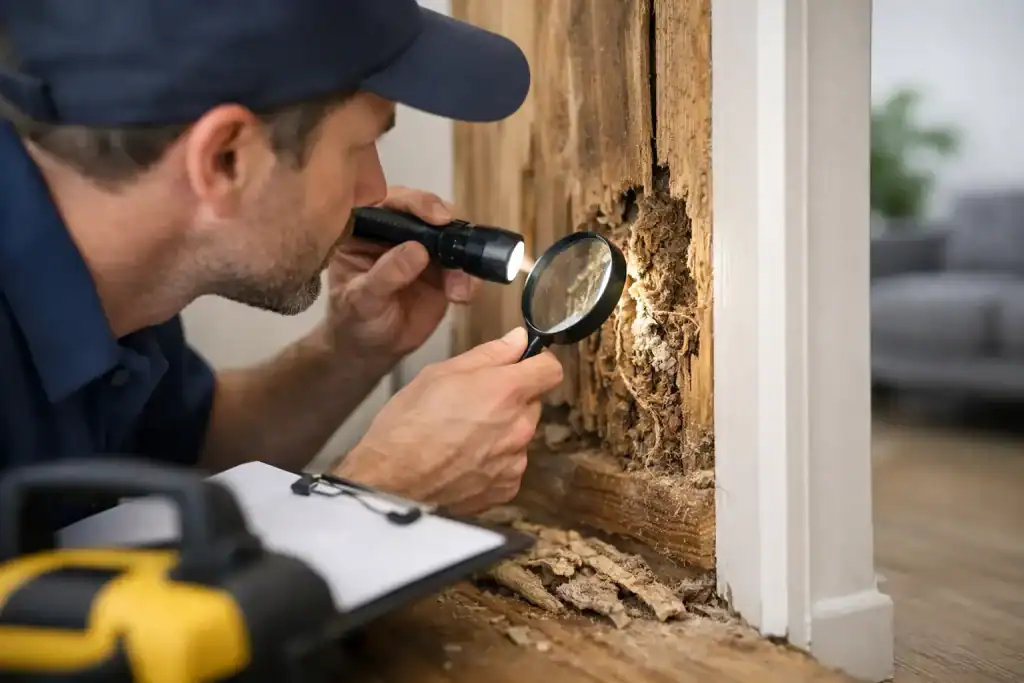
Inside the home, the inspector checks accessible rooms, skirting boards, door jambs, window frames, walls and visible timbers for signs such as hollow sounding wood, distortion, blistering paint, sagging surfaces or fine termite workings.
This is not about tearing the house apart. A standard inspection is visual and non-invasive, supported by tools designed to detect signs without unnecessary damage. If there is reason to suspect concealed activity, the inspector may recommend further investigation, but that should be explained clearly before anything more is done.
Roof voids and subfloors
If accessible, these areas are especially important. Roof voids can reveal timber damage, moisture problems and evidence of termite pathways. Subfloors are often higher risk because they can be dark, humid and less frequently checked.
Poor ventilation, leaking pipes, timber offcuts and direct soil contact under the home can all create ideal termite conditions. In older homes across the Northern Beaches and nearby suburbs, subfloor inspections can be one of the most valuable parts of the process.
What tools are used during a termite inspection
A professional inspection is based on training and experience, but tools help confirm what the eye may not immediately pick up. Depending on the property, inspectors may use a moisture meter, a sounding tool, a strong torch and other detection equipment to identify anomalies in timber and wall areas.
Moisture readings are particularly useful because termite activity and excess moisture often go hand in hand. High readings do not automatically mean termites are present, but they do point to conditions that deserve closer attention.
That is where experience matters. Good inspectors do not jump to conclusions. They assess the full pattern of evidence and explain what is confirmed, what is suspected and what needs monitoring.
What inspectors are actually looking for
People often assume the goal is simply to find termites. In reality, the termite inspection process is looking for several layers of risk.
The first is direct evidence, such as live termites, mud shelter tubes, damaged timber, discarded wings or workings in accessible areas. The second is indirect evidence, including moisture problems, poor drainage, concealed entry points and landscaping that makes inspection difficult. The third is history, such as previous termite damage or treatment zones that may need review.
This broader view is important because not every infestation is visible on the day. A clear report should tell you both what was found and what could allow termites to establish later.
How long a termite inspection takes
There is no single answer because it depends on the size and layout of the property, how accessible the inspection areas are, and whether there are obvious concerns that need closer examination.
A smaller unit may take far less time than a large family home with subfloor access, roof voids, detached structures and dense garden beds. What matters more than speed is thoroughness. If an inspection feels rushed, that is usually not a good sign.
A proper job should leave you feeling informed rather than hurried through the process.
What happens after the inspection
After the inspection, you should receive a clear explanation of the findings. If there is evidence of termite activity, the next step may be a treatment recommendation tailored to the property and the level of risk. If no activity is found, you may still be advised on preventative measures.
That could include fixing leaks, improving drainage, reducing timber-to-soil contact, clearing inspection paths around the slab edge or scheduling routine follow-up inspections. Sometimes the best outcome is not urgent treatment but better property management.
This is also where communication matters. You should know what was inspected, what could not be accessed, what was found, and what actions make sense now versus later.
Guide to termite inspection process for buyers and owners
For existing homeowners, regular inspections are part of responsible maintenance. For buyers, they are a critical piece of due diligence. A property can look beautifully presented and still hide termite issues behind walls, under floors or around external timber features.
That said, inspections do have limits. They are based on accessible areas and visible evidence at the time of inspection. If furniture blocks walls, subfloors are too tight to enter or storage fills the garage perimeter, those constraints affect what can be assessed. A trustworthy inspector will be upfront about that rather than pretending the inspection was more complete than it was.
For owners, that honesty is useful. It tells you where access needs to improve before the next inspection and helps avoid a false sense of security.
How often should termite inspections be done?
For many properties, annual termite inspections are a sensible baseline. In higher-risk homes, more frequent checks may be recommended. Factors such as past termite history, surrounding vegetation, moisture issues, nearby bushland and construction type all influence the right schedule.
It depends on the property. A low-set home with abundant garden beds and known damp areas may need closer monitoring than a newer build with well-managed drainage and clear inspection zones. The right advice should feel tailored, not generic.
Choosing a termite inspector
Not all inspections are equally thorough. Look for a provider that explains the process clearly, understands local building conditions and focuses on both detection and prevention. If you have children, pets or wildlife concerns around the property, it also helps to work with a team that takes a lower-tox, environmentally responsible approach wherever possible.
That is one reason many local households choose specialists such as Clean & Green Pest Control. The value is not just in finding problems. It is in giving practical, honest advice that helps protect the property without creating unnecessary worry or unnecessary chemical exposure.
A termite inspection should leave you with clarity. Even when the news is not ideal, knowing where you stand is far better than guessing. If your home has not been checked in some time, or if conditions around the property have changed, booking an inspection now can be one of the simplest ways to stay ahead of a much bigger repair bill later.