How Much Does Bird Proofing Cost in Sydney?
A few pigeons on the roof can quickly become a bigger problem: droppings around entryways, blocked gutters, noisy nesting in ceiling spaces and damage to solar panels. So, how much does bird proofing cost? For most Sydney properties, the answer depends less on the number of birds you can see and more on where they are roosting, how easily the area can be accessed and the right long-term exclusion method.
Bird proofing is designed to prevent birds from landing, nesting or returning to problem areas without unnecessary harm. A professional quote should account for the property, bird activity and a practical solution that protects people, pets and native wildlife.
How Much Does Bird Proofing Cost?
As a general guide, professionally installed bird proofing can range from a few hundred dollars for a small, accessible area to several thousand dollars for larger homes, strata buildings or commercial sites. A minimum service fee may apply where a technician needs to inspect, clean and protect a small section of roofline, balcony or awning.
For common jobs, homeowners may see pricing in these broad ranges:
- Small ledges, signs, air-conditioning units or short roof edges fitted with bird spikes or wire: often from around $350 to $1800
- Solar panel mesh installation on a typical home: commonly around $900 to $3000, depending on panel numbers, roof access and whether nesting material needs removal.
- Balcony, courtyard or lightwell netting: often from $700 to $3500, depending on the opening size, fixing points and finish required.
- Large roof voids, warehouse loading bays, strata car parks or commercial netting projects: generally from $4000 and can run well beyond $10000 for complex work.
These figures are useful starting points, not a substitute for an on-site assessment. A low quote can be appealing, but it may not include safe access equipment, cleaning, durable fixings or enough coverage to stop birds simply moving 50 centimetres down the building.
What Changes the Price of Bird Proofing?
The material itself is only part of the cost. Professional bird control is largely about identifying how birds are getting in, where they are nesting and how to exclude them without creating a new safety or maintenance issue.
The size and shape of the problem area
A straight, low roof edge is relatively quick to protect. A complicated façade with pipes, signs, solar panels, skylights, air-conditioning equipment and narrow ledges takes more planning and labour. Netting a simple balcony opening is different from enclosing an irregular lightwell several storeys up.
Pricing is usually based on linear metres for spikes and wire, square metres for netting, or the number of solar panels that require mesh. The more corners, gaps and fixing points involved, the more time the work takes.
Access and working height
Safe access has a significant effect on cost. A technician may be able to reach a ground-floor awning with a ladder, while a steep two-storey roof, busy commercial frontage or apartment building may require elevated work platforms, roof safety systems or additional technicians.
This is not an area where shortcuts are worth the risk. Proper access protects residents, staff, passers-by and the technicians carrying out the work. It also helps ensure every gap is properly checked rather than treated as an afterthought.
The bird species and level of activity
Pigeons are a common concern around balconies, solar panels, warehouses and shopping strips. Mynas, starlings, sparrows and other birds can also occupy roof voids and building gaps. The right approach depends on the species, its behaviour and whether nests, eggs or young birds are present.
Heavy roosting activity often means more cleaning and preparation before exclusion can begin. Bird droppings can be slippery and may carry bacteria, while old nesting material can attract insects and block drainage points. Removing this material safely and hygienically adds to the job scope, but it is often necessary for a lasting result.
The proofing method selected
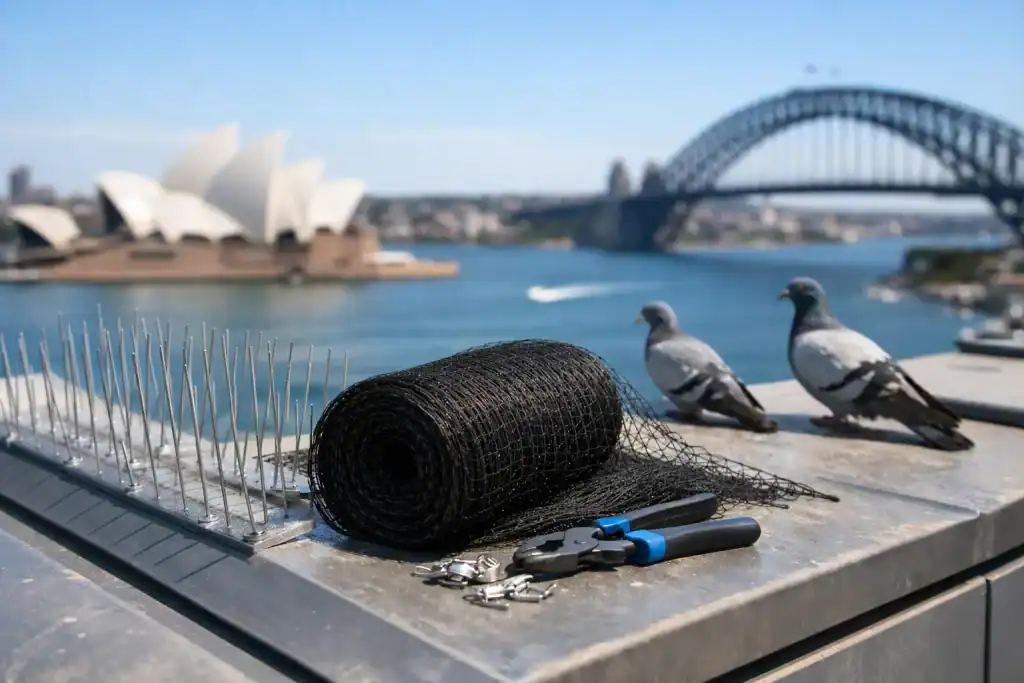
Different areas call for different solutions. Bird spikes can discourage landing on ledges, beams and signs, but they are not suitable for every surface. Tensioned bird wire is discreet and can work well on narrow architectural ledges. Netting creates a physical barrier for larger openings, such as balconies, loading areas and roof voids.
Solar panel mesh is made to stop birds nesting beneath panels while allowing ventilation and drainage. It is generally a better choice than improvised mesh or foam, which can trap debris, damage panels or create access points for birds.
The best option is not always the cheapest per metre. For example, spikes may cost less initially than netting, but netting may be the more effective choice if birds are entering an enclosed courtyard or roof cavity. A good technician explains that trade-off clearly before work begins.
Bird Proofing Costs More When Cleaning Is Required
People often focus on the exclusion material, but cleaning can be one of the most valuable parts of bird proofing. If droppings, feathers and nests are left behind, the area can remain unhygienic and inviting to returning birds.
The cleaning component may include removing nesting debris, treating affected surfaces where appropriate and checking gutters, drainage channels and roof valleys for blockages. On solar panel jobs, the technician should also inspect the edges beneath the panels for nest build-up before fitting mesh.
Ask whether your quote includes cleaning and waste removal, or whether these are priced separately. Clear scope matters, particularly for strata managers and commercial properties that need to budget accurately and maintain safe common areas.
Is DIY Bird Proofing Cheaper?
Buying spikes, plastic owl decoys, reflective tape or loose netting from a hardware store can look like a quick saving. In a small, low-risk area, a well-fitted product may help temporarily. But DIY work often becomes expensive when the material is poorly secured, birds nest around it, or roof access creates a safety risk.
Decoys and sound devices can also lose their effect once birds realise there is no threat. Loose netting is especially problematic because it can entangle wildlife and deteriorate in the weather. If you are managing a balcony or garden, remove food sources, keep bins closed and avoid feeding birds, but leave complex exclusion work to a qualified professional.
Professional installation gives you a solution matched to the site, with materials secured to withstand wind, rain and coastal conditions. That matters on the Northern Beaches and other exposed Sydney locations, where salt air and strong weather can shorten the life of poorly chosen fixings.
What to Look for in a Bird Proofing Quote
A useful quote should do more than provide one total figure. It should identify the affected areas, explain the recommended proofing method and state whether cleaning, access equipment, materials, labour and GST are included.
It is also worth asking how the installer will avoid harming birds and whether the work considers active nests. Bird management should focus on humane exclusion and prevention, not unsafe traps, poisons or methods that could harm non-target wildlife.
For strata and business sites, ask about staging the work to minimise disruption. A well-planned job may be completed outside busy trading times or coordinated around resident access, deliveries and building maintenance schedules.
When Bird Proofing Is Worth the Investment
Bird proofing is often more cost-effective than repeated clean-ups, gutter clearing and call-outs for the same nesting issue. It can protect solar panel performance, reduce slip hazards from droppings and prevent birds entering roof spaces where noise and odour become difficult to manage.
The right time to act is before nesting becomes established. If birds are only beginning to investigate an area, a simple exclusion measure may be enough. Once a site becomes a regular roost, the job can involve cleaning, wider coverage and more detailed access work.
A site inspection gives you the clearest answer on price and helps avoid paying for a solution that does not fit the problem. Clean & Green Pest Control can assess the activity, explain humane proofing options and provide straightforward advice so your home, workplace or strata property stays protected for the long term.