
How to Identify Termite Mud Tubes Around Your Home
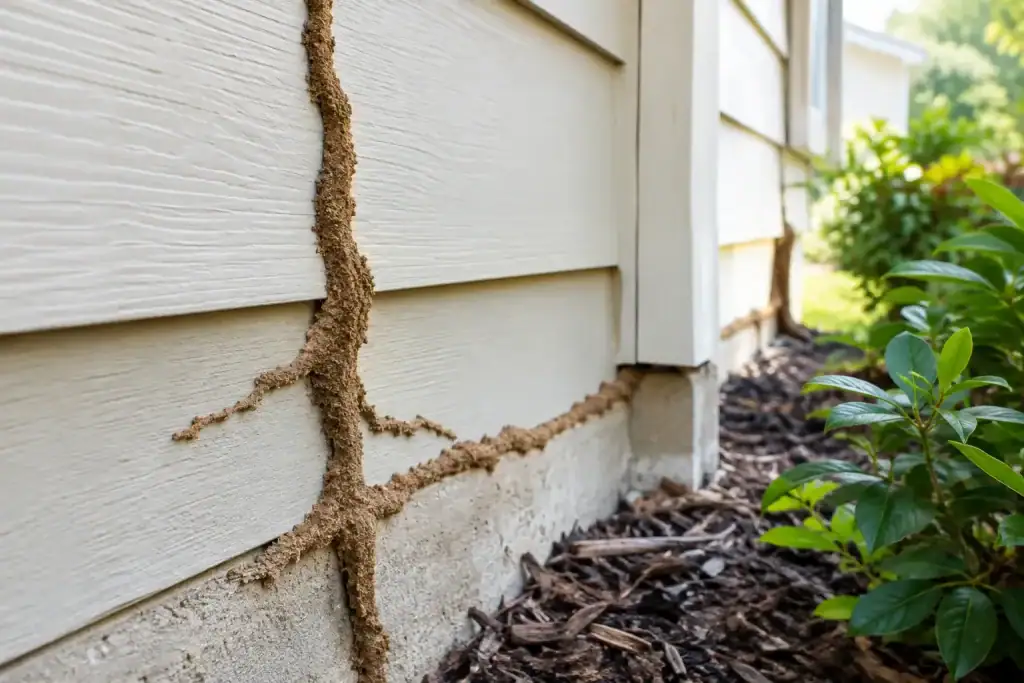
A thin, brown line climbing a brick wall or disappearing behind a skirting board can be easy to dismiss as dirt. Knowing how to identify termite mud tubes could protect your home from a much more serious problem. These small structures are often a sign that subterranean termites have found a sheltered route between the ground and the timber in your property.
Termites can cause damage quietly, often inside walls, under floors or around concealed timber. The tube itself is not proof of the extent of damage, but it is a clear reason to arrange a professional termite inspection promptly. Acting early gives you more treatment and repair options, and can prevent a small discovery becoming a costly building issue.
What are termite mud tubes?
Termite mud tubes, sometimes called shelter tubes or leads, are narrow tunnels made from soil, saliva, wood particles and droppings. Subterranean termites build them to travel safely between their nest, usually in the ground, and a food source such as structural timber, skirting boards, door frames or stored wood.
Most termites need a damp, protected environment to survive. Open air and sunlight can quickly dehydrate them, so the tube works like a covered corridor. It allows the colony’s worker termites to move without being exposed to predators, dry conditions or sudden changes in temperature.
A tube may be only a few millimetres wide or as thick as a finger. It is usually earthy brown, grey or reddish, depending on the soil around your property. On Sydney homes, you may find tubes on brickwork, concrete piers, foundation walls, pipes or timber posts.
How to identify termite mud tubes accurately
The clearest sign is a raised, enclosed channel that appears to be made from packed soil rather than a stain on the wall. It may run vertically from the soil line, follow a crack in masonry, cross a concrete edge or disappear into a small gap beneath cladding.
A termite tube is usually irregular in shape and feels dry or slightly crumbly on the outside. It is not a perfectly smooth line of mud splashed up by rain. It also tends to have a deliberate path, connecting the ground to a concealed entry point or timber element.
Look closely at the position as well as the material. Tubes that begin near garden beds, mulch, retaining walls or damp ground and travel towards the home deserve attention. Termites commonly use hidden routes, so a tube can also appear inside a subfloor, behind stored items in a garage, around plumbing penetrations or inside a cupboard against an exterior wall.
Do not assume that a broken or empty-looking tube means the termites have gone. A colony may have moved temporarily, switched to a different route or been disturbed. Fresh repair work on a damaged tube can indicate ongoing activity, but only a thorough inspection can determine whether termites are active and where they are feeding.
Common places to check
A careful visual check around accessible areas is worthwhile, particularly after heavy rain, plumbing leaks or changes to gardens and landscaping. Focus on the lower parts of the building, where soil and structure meet.
Check exposed slab edges, brick piers, weep holes, retaining walls and the bases of timber posts. In homes with accessible subfloors, inspect piers, joists, bearers and the inside face of foundation walls using a torch. Garages, under-deck areas, garden sheds and fence lines can also reveal activity before it reaches the main house.
Keep in mind that an inspection at home has limits. Termites can enter through gaps too small to notice and travel behind wall linings, insulation, cabinetry and flooring. A home can have significant termite activity without visible tubes outside.
What termite tubes are commonly mistaken for
Not every muddy mark is a termite shelter tube. Spider webs coated with dust, old mud-dauber wasp nests, water staining and dried soil on masonry can look similar from a distance. The difference is often in the shape and purpose.
Mud-dauber wasps build distinct rounded or lumpy cells, usually under eaves, in sheds or beneath covered outdoor areas. Their nests do not form narrow, continuous tunnels from soil to timber. Water stains lie flat against a surface, while termite tubes are raised and enclosed.
Ants can create soil deposits around cracks and pavers, but they do not usually build the same covered, mud-like passageways up walls. If you are unsure, treat the finding as potential termite activity rather than pulling it apart to investigate.
Why you should not remove or spray a suspected tube
It is tempting to knock down the tube or spray it with an off-the-shelf insecticide. This can make the problem harder to assess. Disturbing the route may cause termites to retreat and establish another concealed path, leaving the colony active but more difficult to locate.
General insect sprays are not a reliable termite treatment. They may affect a small number of exposed workers without reaching the colony or addressing how termites entered the building. They can also introduce unnecessary chemicals around children, pets and garden wildlife.
Instead, take a clear photo from a short distance and note where you found it. Avoid leaning materials against the area, digging around it or moving soil nearby. A licenced termite professional can inspect the tube, surrounding building elements and likely entry points, then recommend a treatment and monitoring plan based on the evidence.
What happens during a professional termite inspection
A proper termite inspection is more than a quick look at one wall. The technician checks accessible interior, exterior, roof void and subfloor areas, looking for shelter tubes, timber damage, moisture sources and conditions that make termite activity more likely.
They may use specialised detection tools where appropriate, but no inspection method can see through every surface. Furniture, stored boxes, locked rooms, dense vegetation, wall linings and inaccessible subfloors can limit what is visible. A trustworthy technician will explain these limitations clearly and document any areas that could not be inspected.
If termites are found, treatment should be tailored to the species, extent of activity, construction of the property and access conditions. Depending on the situation, this may involve a targeted treatment, a baiting and monitoring system, or a broader management approach. The aim is not simply to remove visible termites, but to protect the home while using treatment methods responsibly around your family, pets and the local environment.
Reduce the conditions termites like
No home is completely termite-proof, especially in leafy coastal and suburban areas where soil moisture and established gardens are common. However, practical maintenance can reduce the conditions that attract termites and make early warning signs easier to spot.
Keep garden soil, mulch and stored timber below the building’s visible slab edge and away from weep holes. Repair leaking taps, drains and pipes, and make sure water drains away from the house. Avoid stacking firewood, cardboard or timber offcuts against external walls. Trim plants back enough to allow ventilation and a clear view of the building perimeter.
Regular professional inspections remain one of the most useful safeguards, even if you have never seen a tube. The appropriate frequency depends on construction type, past termite history, surrounding vegetation, drainage and your property’s risk profile. Many homes benefit from an annual inspection, while higher-risk properties may need closer monitoring.
If you find a suspected tube, a fast, measured response is the safest one. Leave it in place, keep children and pets away from the area where practical, and arrange an inspection with a qualified local termite specialist. Clean & Green Pest Control can help Northern Beaches and Sydney property owners understand what they are seeing and choose a considered next step that protects both the building and the people living in it.
A small line of mud is worth taking seriously, but it does not need to cause panic. Clear evidence, professional assessment and sensible prevention give you the best chance of stopping termites before hidden damage takes hold.