
Why Are There Ants in My Bathroom? Causes & Fixes
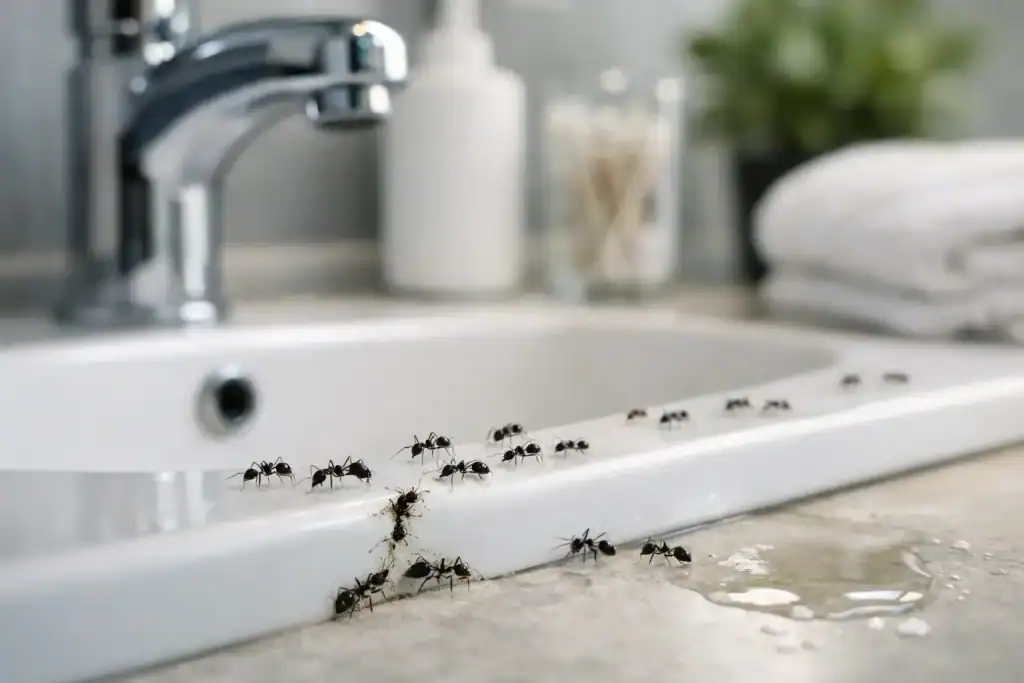
A line of ants across the vanity is unsettling, especially when the bathroom looks spotless and there is no obvious food in sight. If you are asking, Why Are There Ants in My Bathroom?, the short answer is usually moisture, access and a reliable food source somewhere nearby. Ants are expert foragers. Once one finds what it needs, it leaves a scent trail that can quickly bring the rest of the colony indoors.
A few ants after heavy rain or a run of humid Sydney weather may be a short-lived nuisance. A daily trail, ants appearing from a wall gap, or activity that returns straight after cleaning can point to a moisture issue or a nest close to the house. Finding the cause is the best way to stop the problem rather than simply wiping away the ants you can see.
Why are there ants in my bathroom?
Bathrooms offer several things ants actively seek, even in a well-kept home. Water is usually the biggest draw. Tiny leaks under a basin, condensation around pipes, a damp bath mat or water sitting in a toothbrush holder can keep a small group of ants coming back.
Moisture and hidden plumbing leaks
Ants need water to survive, and a bathroom can provide it through the smallest of gaps. A slow leak beneath the vanity, worn silicone around a shower screen or moisture behind a tiled wall may not be obvious at first. Some ants will travel through wall voids to reach damp timber, insulation or pipe penetrations.
Pay attention to activity around the base of the toilet, under the basin, beside the shower and near floor drains. A musty smell, swollen cabinetry, loose tiles or paint that is bubbling can indicate more than an ant problem. It is worth arranging a plumber if you suspect a leak, as pest treatment alone will not correct the condition attracting them.
Soap residue, toothpaste and bathroom rubbish
Ants do not need a visible crumb to find food. Many species are attracted to sweet or greasy residues left on benches, toothpaste splashes, used tissues, hair products and open bathroom rubbish bins. Even some soaps and skincare products contain plant oils, sugar-based ingredients or fragrances that can interest foraging ants.
This does not mean your bathroom is unclean. It simply means ants have found a resource that is easy to reach. In homes with young children, small spills around a step stool, bath toys or a nappy bin can also keep a trail active.
Easy entry points around pipes and walls
Most bathroom ants enter through gaps rather than coming up through the drain. They may use cracks at the skirting board, openings where plumbing enters the wall, gaps around exhaust fans, window frames or damaged grout and sealant. A colony may be outdoors in the garden, beneath paving or in a wall cavity, with worker ants travelling indoors for water.
Warm, wet weather can make this more noticeable. Rain can disturb a nest outside, while dry periods can drive ants indoors in search of moisture. Apartments and strata properties can be more complicated because ants may move through shared wall voids, service ducts or neighbouring units.
A nest may be close by
A persistent ant trail does not always mean the nest is inside your bathroom, but it may be nearby. Ants can nest in soil, mulch, under pavers, in rotting timber, around foundations and occasionally inside wall cavities. If you only remove the visible workers, the colony can continue sending out replacements.
What the ant trail is telling you
Watch where ants travel before cleaning them away. Their route often provides useful clues. A trail that starts at a basin cabinet suggests water or a plumbing penetration. Ants moving from a window may be entering from vegetation touching the building. Activity near an internal wall, particularly if it continues overnight, can indicate a hidden access point.
The size and behaviour of the ants also matter. Small black or brown ants are common household visitors, while larger ants may be associated with damp or decaying timber nearby. Winged ants can appear when a colony is reproducing. They are not automatically termites, but winged insects indoors should be identified properly, particularly if you also notice damaged timber, mud tubes or discarded wings.
Do not assume every ant is harmless simply because it is small. The practical concern is usually not a bite or sting, but the ongoing trail, contamination around personal-care items and the possibility that dampness is creating a broader maintenance issue.
How to get rid of bathroom ants safely
The immediate goal is to remove the scent trail and make the bathroom less attractive, while avoiding actions that scatter the colony. Start with the simple fixes, then monitor for several days.
- Clean the trail thoroughly. Wipe benches, splashbacks and floors with warm soapy water, then dry them well. Empty the bathroom rubbish bin regularly and rinse containers that hold toothpaste, cosmetics or hair products.
- Remove standing water. Dry wet areas after showers, hang bath mats to dry and avoid leaving water in cups or containers. Check beneath the vanity for drips and make sure the exhaust fan is working effectively.
- Seal obvious access gaps. Once the area is dry, seal small cracks around pipes, skirting boards and window frames with suitable caulk or sealant. Do not seal over a suspected active leak – have the moisture issue repaired first.
- Use baits carefully if needed. Slow-acting ant baits can allow workers to carry food back to the colony, which is more effective than killing only the ants in the trail. Place them away from children and pets, and follow the product directions exactly. Avoid spraying insecticide directly around a bait, as this can repel the ants before they take it back.
- Check outside as well. Trim plants away from exterior walls, keep mulch and leaf litter from building edges where practical, and look for nests around paving, taps and garden beds. Outdoor conditions often explain why indoor bathroom activity keeps returning.
For households with children, pets or native wildlife visiting the garden, it is sensible to be cautious with off-the-shelf sprays. Broad spraying may provide a quick visual result but can expose non-target animals unnecessarily and may not reach the colony. Targeted treatment and exclusion work are generally the more responsible long-term approach.
Why bathroom ants keep coming back
If ants reappear within days, one of three things is usually happening: the colony has not been reached, the scent route remains active, or there is still a reliable source of moisture or food. Cleaning helps, but it cannot resolve an established nest in a wall void or under paving.
Repeated activity is especially common when a property has hidden leaks, poor ventilation or several entry points. In older homes, gaps around original plumbing and settling cracks can give ants easy access. In newer homes, landscaping close to external walls and tightly sealed internal spaces can still create ideal conditions if moisture builds up.
Tenants should document recurring activity and report signs of leaks or building damage promptly. Property managers and strata committees may need a coordinated approach where ants are moving through common areas or between residences. Treating one unit without addressing shared entry points can lead to a frustrating cycle of reinfestation.
When to call a professional for ants in the bathroom
Professional help is worthwhile when you see a regular trail for more than a week, ants are emerging from walls or cabinetry, multiple rooms are affected, or DIY baits have not reduced activity. It is also a good idea if you cannot use standard products safely around young children, pets or sensitive areas.
A trained technician can identify likely entry points, assess whether moisture is contributing to the problem and select a treatment method suited to the species and location of the nest. A good service should explain where treatment is being applied, what precautions are needed and what results to expect over the following days.
For homes across Sydney’s Northern Beaches and surrounding suburbs, Clean & Green Pest Control can provide targeted ant management that focuses on effective control while reducing unnecessary chemical exposure around families, pets and gardens. Persistent bathroom ants are rarely something you need to simply put up with – once their water source, pathway and colony are addressed, the bathroom can return to being the clean, quiet space it should be.