
Found Mud Tubes on Your House? Here’s What It Means
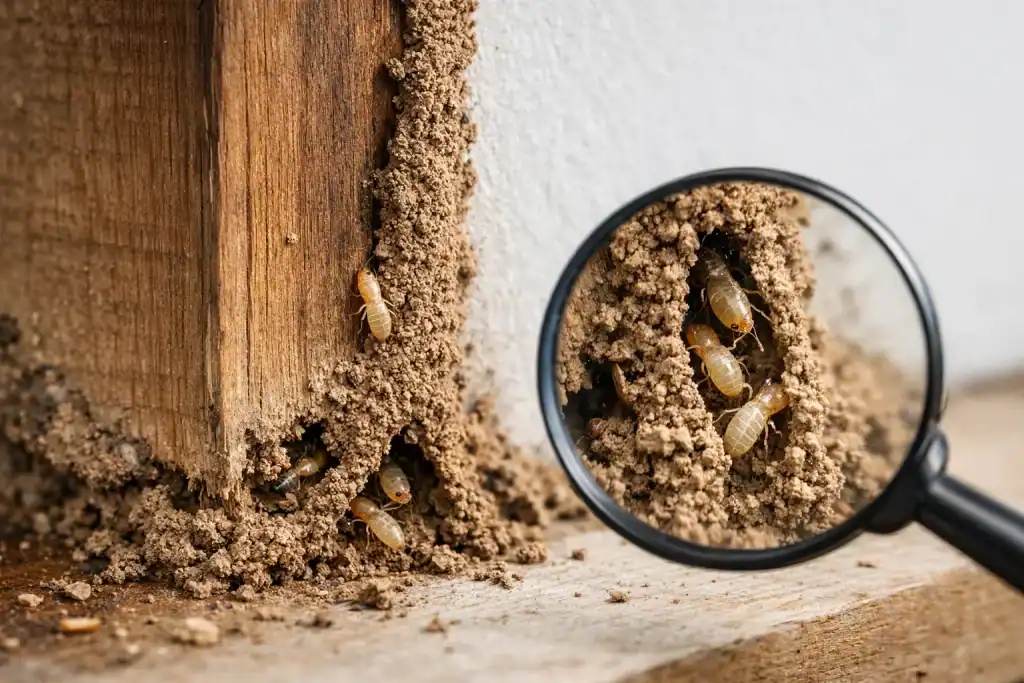
If you spot Termite mud tubes on a wall, pier, subfloor post or brick joint, don’t ignore them and don’t just knock them down. These pencil-width tunnels are one of the clearest warning signs that termites may be moving between the soil and the timber in your home. The tricky part is that the visible tube is rarely the full problem. It is usually just the access road.
For homeowners and property managers, that matters because termites often stay hidden until damage is already well underway. Mud tubes can show up outside near slab edges, under the house, inside garages, around retaining walls, or even behind stored items where no one looks often. If you know what you’re seeing, you can act early and avoid a much bigger repair bill.
What are termite mud tubes?
Termite mud tubes are narrow shelter tunnels built from soil, saliva and droppings. Subterranean termites use them to travel safely between their nest and a food source, usually timber. The tube helps them stay moist and protected from light, heat and predators.
In practical terms, they are termite highways. Instead of crossing open ground and drying out, termites build covered pathways over brick, concrete, metal and other surfaces until they reach timber. That timber might be a wall frame, flooring, skirting board, roof timber, fence post or deck support.
Most tubes are brown or earthy in colour and can look like dried mud stuck to a surface. Some are thin and easy to miss. Others are thicker, branching and more obvious, especially where termite activity has been going on for some time.
Why termites build mud tubes
Termites need moisture to survive. Unlike ants, they cannot spend long periods exposed to open air, especially in warm Australian conditions. Mud tubes solve that problem by keeping their route humid and dark.
They also allow termites to bypass materials they cannot eat. A concrete slab, brick wall or steel support might stop direct access to timber, but it does not stop termites building around it. That is why homes with slab construction are not automatically safe from termites. If there is a gap, crack, joint or concealed edge, termites may still find a way in.
This is also why mud tubes should never be judged by size alone. A small, neat tube can still indicate an active colony. A larger tube may point to established movement, but either way the concern is not the tunnel itself. It is what the termites may have already reached.
Where to look for termite mud tubes
The most common places are areas where timber sits close to soil or where moisture tends to build up. Around the outside of a home, that includes slab edges, weep holes, garden beds against walls, retaining walls, fence lines, deck posts and service penetrations.
Inside or underneath a building, check subfloors, piers, stumps, support posts, garage walls, storage areas and the edges of internal walls. In strata and commercial settings, tubes can appear in basements, plant rooms, shared boundary walls and ground-floor service zones.
Homes in leafy coastal suburbs and older properties can be more vulnerable simply because there are more gardens, more moisture, more concealed access points and sometimes ageing building details. That does not mean newer homes are immune. Termites are interested in timber and access, not the age of the real estate listing.
Are all mud tubes active?
No. Some tubes are active, and some are old or abandoned. That is one reason DIY guesswork can be risky.
An active tube may contain live termites if opened, often creamy white workers moving quickly away from light. An inactive tube may look dry and empty. But even that does not tell the full story. Termites can abandon one route and continue using another nearby. They can also rebuild very quickly after disturbance.
Breaking a tube to check it might satisfy curiosity, but it can also cause the colony to change behaviour and make professional detection harder. In some cases, termites retreat temporarily and reappear through a different path, deeper inside the structure where they are even less visible.
What termite mud tubes can tell you about risk
Mud tubes usually point to subterranean termite activity, which is the termite group most commonly linked to structural damage in homes. If tubes are attached to the house itself, especially near timber elements, the risk level should be treated seriously.
That said, the presence of tubes does not always mean severe structural damage has already occurred. Sometimes they are found early, before major harm is done. Other times, visible tubes are only the sign that finally alerts the owner to a much older infestation.
The key factors are where the tubes are, whether live termites are present, how long activity has been underway and whether termites have reached structural or decorative timber. A proper inspection looks beyond the tube and checks the surrounding building fabric, moisture conditions and likely entry points.
What you should do if you find them
The best first step is simple: leave the tubes in place and arrange a termite inspection as soon as possible. Do not spray them with supermarket insecticide, paint over them or scrape them off. Quick fixes often kill a few visible termites while leaving the colony active elsewhere.
Professional termite management works best when the technician can assess the full pattern of activity. That includes identifying whether termites are entering from the soil, whether there are multiple access routes and whether any environmental conditions are making the property more attractive to them.
A good inspection should also explain the next steps clearly. Depending on the situation, that might involve treatment, monitoring, a baiting program, a chemical barrier, or a combination of methods. The right response depends on the construction type, infestation level and how accessible the affected areas are.
Why DIY termite treatment often backfires
Termites are not like cockroaches or ants where a surface spray can sometimes reduce activity quickly. With termites, visible insects are only a small part of the problem. The colony may be underground, under the slab, inside a wall cavity or beyond the immediate property boundary.
When disturbed improperly, termites can shut down one route and continue feeding through another. That can delay proper treatment and give the infestation more time to spread unnoticed. For households with children and pets, there is also the added issue of using chemicals without a clear diagnosis or plan.
That is why many property owners prefer an approach that is both targeted and family-conscious. Businesses like Clean & Green Pest Control focus on treatment options that are effective while also being mindful of children, pets and the surrounding environment.
Common conditions that attract termites
Mud tubes are often a symptom of a broader issue around moisture or access. Leaking taps, poor drainage, blocked subfloor ventilation, timber in contact with soil, dense garden beds against the house and stored timber under the home can all increase termite risk.
Even something as ordinary as mulch piled too high against an external wall can make inspections harder and give termites concealed entry. The same goes for raised paths, foam insulation, garden edging and renovations that accidentally bridge termite barriers.
Regular inspections matter because risk changes over time. A property that was clear two years ago may now have drainage issues, landscaping changes or building wear that makes it more vulnerable.
How a professional inspection helps
A termite inspection is not just a quick look at the tube. It is a broader assessment of the home, the likely point of entry and the conditions that may support future activity. That is what turns a worrying sign into a practical action plan.
For homes, that means checking internal and external areas, subfloors where accessible, roof voids where relevant, fences, outbuildings and the perimeter of the structure. For strata and commercial properties, it may also involve shared walls, common areas and maintenance factors that affect multiple lots or tenancies.
The value is not only in finding termites. It is in understanding how to stop current activity and reduce the chance of it returning. That may include treatment recommendations, repair advice, moisture management and ongoing inspection intervals.
A small tube can signal a big problem
One of the most common mistakes people make is assuming termite mud tubes are minor because they look small or harmless. In reality, termites succeed by staying out of sight. By the time they build a visible shelter tube, they may already have been active for weeks or months.
If you have seen anything that looks like a dried mud trail on brick, concrete, timber or under the house, it is worth taking seriously. A prompt inspection can mean the difference between a targeted treatment and costly structural repairs later on. When it comes to termites, early action is usually the safer, cheaper option.