
How to Find an Ant Nest Around Your Home
A line of ants across the kitchen bench is rarely the real problem. It is simply the workforce travelling between food, water and a hidden colony. Knowing how to find an ant nest around your home helps you deal with the source of the activity, rather than repeatedly wiping up the same trail and hoping it disappears.
For families, pet owners and property managers, the aim is not to spray every ant in sight. It is to identify where they are nesting, understand what is attracting them and choose a treatment that is effective without creating unnecessary risk for children, pets, gardens or native wildlife.
Start by Following the Ant Trail
The most reliable clue is a live trail. Ants leave scent markers for other workers, so they often travel in fairly consistent lines between their nest and a food or water source. Avoid disturbing the trail straight away. Instead, watch it quietly for 10 to 15 minutes and work out which direction the ants are travelling.
Some ants will be heading towards food, while others will be returning to the colony. The returning ants may carry crumbs, insect remains or droplets of liquid. Follow the trail away from the food source, checking along skirting boards, under appliances, around door frames, beside pipes and through small gaps in masonry.
Outside, trails commonly run along garden edges, retaining walls, paving, fences, tree roots and the side of the house. A torch can help when ants are most active at dusk or early in the morning. On Sydney’s Northern Beaches, warm weather and sandy soils can make outdoor ant activity especially noticeable after rain or during dry spells.
Know the Common Places Ants Nest
An ant nest is not always a large mound in the lawn. Many species build colonies in protected spots that are easy to miss, including cracks in concrete, under pavers, beneath mulch, inside wall voids and around rotting timber.
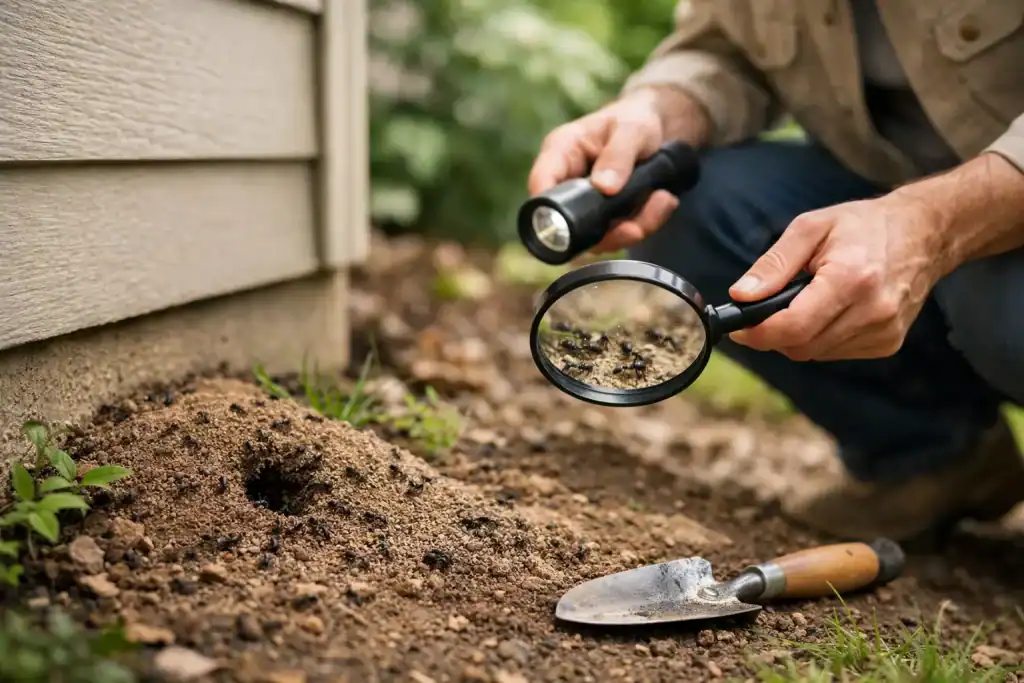
Look for a small opening with regular ant traffic. You may see loose soil, fine sand or tiny grains pushed out around the entrance. These spoil piles are often a strong sign of a nest underground, particularly beside paths, driveways and garden beds.
Indoors, ants may nest within wall cavities, under flooring, behind cupboards or around plumbing penetrations. If a trail appears from a gap near the kitchen, bathroom or laundry, the nest may be nearby or the ants may be using the void as a protected highway from an outdoor colony.
The most common nesting locations are:
- under pavers, concrete slabs and garden edging
- in lawn areas, garden beds, mulch and around plant roots
- inside rotten timber, tree stumps, fence posts or sleeper walls
- in roof voids, wall cavities and gaps around pipes or wiring
- beneath appliances, cabinetry or flooring where moisture is present
A nest can also be some distance from where you see the ants. A colony may send workers several metres, or farther, to a reliable food source. That is why tracing the full trail matters more than treating only the entry point.
Check for Food and Moisture That Draw Ants In
Ants are opportunistic. A few biscuit crumbs, pet food left out overnight or a sticky drink spill can support a steady stream of workers. Sweet foods are obvious attractants, but ants also seek proteins, oils and water.
Check beneath the toaster, microwave and fridge, inside pantry corners, around rubbish bins and under pet bowls. Wipe benches and floors with warm soapy water to remove food residue and disrupt scent trails. Store pantry items in sealed containers, and avoid leaving ripe fruit on the bench for long periods.
Moisture is just as important. Persistent ant activity around a bathroom, laundry, hot-water system or kitchen sink can point to a slow leak, condensation issue or damp timber. Fixing the moisture source can make the area far less appealing, while also helping prevent mould and timber damage.
Outside, inspect dripping taps, blocked gutters, overflowing pot saucers and irrigation lines. Dense mulch against external walls, stacked firewood and overgrown vegetation can provide cover and moisture close to the home. You do not need a bare garden, but a clear inspection gap between garden material and the building makes it easier to spot activity.
How to Tell Whether You Have Found the Nest
A single ant emerging from a crack does not confirm a colony. Watch for repeated movement in and out of the same point, particularly at similar times each day. If the traffic increases after you place a small amount of food nearby, that spot may be connected to the nest.
For outdoor nests, avoid poking, flooding or digging into the opening. This can scatter the colony, drive ants deeper into the ground or cause them to establish satellite nests elsewhere. Some species are also quick to bite or sting when their nest is disturbed.
Take a clear photo of the ants and their suspected entry point if you plan to call a pest professional. Their size, colour, behaviour and location can help identify the likely species and guide the right treatment. Small black ants around the kitchen need a different approach from larger ants nesting in timber or aggressive ants in a busy garden area.
Do Not Rely on Surface Sprays Alone
A supermarket spray can kill the ants you can see, but it often does not reach the queen or the broader colony. In some cases, spraying a trail can cause ants to split into smaller groups and relocate, making the problem feel worse over time.
Ant baits can be useful because worker ants carry the food back to the nest. However, bait type matters. Ants may prefer sweet bait at one time of year and protein-based bait at another. Applying the wrong product, placing it in the wrong spot or spraying near bait can reduce its effectiveness.
Be particularly careful with products around children, pets, edible plants, ponds and areas used by native animals. Always follow the product label, keep baits inaccessible to children and pets, and never assume that a product labelled for ants is suitable for every location around the home.
When Ant Activity May Signal a Bigger Issue
Most household ants are a nuisance rather than a direct threat, but some situations warrant professional advice. Large ants appearing from damp or decaying timber may indicate moisture-damaged wood that needs attention. Ants can also be attracted to termite activity, although ants themselves do not mean you have termites.
If you find mud leads, hollow-sounding timber, soft skirting boards, damaged wood or unexplained piles of debris, arrange a termite inspection rather than guessing. Termites are often mistaken for ants during swarming season, but their treatment and risk level are very different.
You should also seek help when trails return after repeated cleaning, nests appear in wall cavities or roof spaces, ants are affecting a food business or strata common area, or a family member has a known allergy to insect stings. A targeted inspection identifies the nesting site, species and contributing conditions before treatment begins.
Prevent the Next Colony From Moving In
Once activity has been treated, prevention is mainly about removing easy access. Seal obvious gaps around pipes, windows, doors and external penetrations with an appropriate sealant. Repair damaged flyscreens, keep tree branches from resting on the roofline and trim vegetation away from walls where practical.
Maintain clean food areas, manage moisture and inspect paving, garden beds and external walls every few weeks during warmer months. If ants return to the same area, do not keep escalating with stronger chemicals. Recurring activity usually means there is still a nest nearby, a hidden entry point or a dependable food or water source.
A local, environmentally responsible pest technician can assess the whole property and use a tailored approach that targets the colony while reducing unnecessary chemical exposure. Clean & Green Pest Control can help households and property managers identify persistent ant activity, treat it thoughtfully and put practical prevention measures in place.
When you can see the trail, you are already holding the best clue. Follow it patiently, look for the conditions sustaining it and address the nest rather than only the ants on the surface.