
Best Bird Deterrents for Warehouses That Work
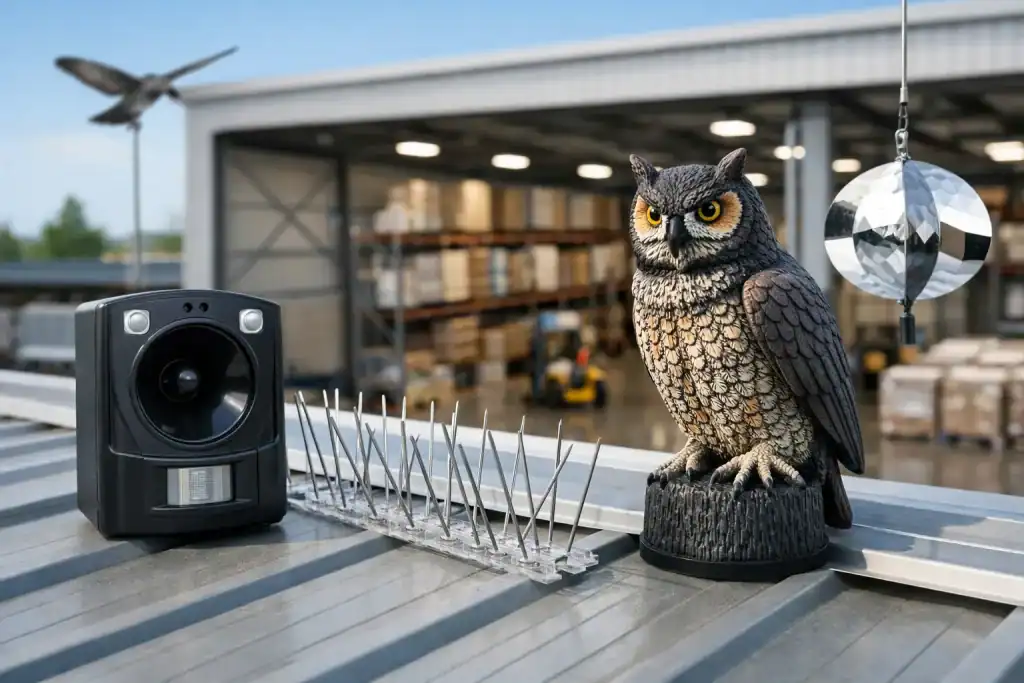
A few pigeons roosting in warehouse rafters can quickly become far more than a nuisance. Droppings can contaminate stock and work surfaces, create slip hazards near loading areas, block gutters and vents, and damage a site’s professional standards. The best bird deterrents for warehouses are not one-size-fits-all products. They are practical, humane systems chosen around the birds’ behaviour, the building layout and the level of protection your operation needs.
For warehouses, factories, distribution centres and food-related premises, the most reliable answer is usually physical exclusion supported by good site management. Visual devices and sound deterrents can help in limited situations, but they rarely solve an established roosting problem on their own.
Why warehouse bird problems need a planned response
Birds are drawn to warehouses for the same reasons people value them: shelter, warmth, high perches and regular access to food or water. Open roller doors, loading docks, damaged roof cladding, roof voids and exposed beams can all give pigeons, starlings and sparrows an easy way in.
Once birds have started nesting or roosting, they tend to return to familiar sites. Simply chasing them away may work for an afternoon, but it does not remove the reason they are there. A successful bird-control plan identifies entry points, food sources, roosting ledges and nesting areas before selecting a deterrent.
This approach also reduces unnecessary risk. Native birds may be protected, and any nest or egg activity needs to be handled carefully. Humane, species-aware control protects your site while respecting wildlife obligations.
The best bird deterrents for warehouses
Bird netting for loading areas and internal spaces
Purpose-fitted bird netting is often the most effective long-term solution for large warehouse openings, roof voids, canopies and internal rafters. It creates a physical barrier that stops birds accessing the areas where they roost, nest or foul stock.
For a loading dock, netting can be installed around an upper opening while allowing normal vehicle and pedestrian movement below. In high-bay warehouses, it may be used to separate roof structures from operational areas. The right mesh size matters: a system designed for pigeons will not necessarily exclude smaller sparrows.
Netting needs professional installation and regular checking. Loose or damaged netting can create entanglement risks for birds and may interfere with warehouse operations. When it is correctly tensioned, secured and maintained, it is discreet, durable and highly humane.
Spikes and wire systems for ledges
Bird spikes are useful on narrow ledges, signs, beams, pipes, gutters and external rooflines where birds land rather than nest. They do not harm birds. Instead, they make landing uncomfortable and encourage them to choose another perch.
For broad or uneven surfaces, tensioned bird wire may be a better option. A low-profile wire system can protect ledges without changing the appearance of the building as much as spikes. This can suit commercial premises where presentation matters, such as customer-facing entrances or strata buildings with warehouse facilities.
Neither option is suitable for every surface. Spikes placed over an existing nest, or fitted without cleaning old droppings and removing nesting material, are unlikely to resolve the problem. They also will not stop birds entering through an open dock or large roof gap.
Proofing gaps, vents and roof access points
Exclusion proofing is one of the most cost-effective bird deterrents because it removes access in the first place. This may include fitting mesh to vents, closing gaps in eaves and cladding, repairing damaged flashing, screening roof voids and sealing openings around pipes or conduits.
The aim is not to make a warehouse airtight. It is to close the routes birds use while preserving ventilation, drainage, fire safety and building access requirements. In a working warehouse, this is why a site inspection matters. A quick patch that blocks an essential vent or affects a fire system can create a new problem.
Proofing is particularly valuable after birds have been removed from an internal area. Without it, the same birds – or a new flock – can return through the same opening within days.
Shock track for persistent perch points
Low-profile electric track systems can deter persistent birds from particular ledges, parapets, signs and roof edges. These systems deliver a mild, brief pulse when a bird lands, teaching it to avoid the surface without causing injury.
They are best reserved for difficult locations where spikes or wire are impractical, or where a highly discreet solution is required. Installation must be done carefully, with consideration for weather exposure, access for maintenance and the species using the area. It is not generally the first choice for broad warehouse interiors or locations with frequent human contact.
Visual deterrents for short-term support
Reflective tape, predator decoys, moving flags and similar visual devices can be useful immediately after cleaning or proofing work, particularly around outdoor loading areas. They may make a site feel less inviting while birds adjust to changed conditions.
Their limitation is habituation. Birds are observant, and a static plastic owl or reflective object soon becomes part of the scenery if nothing else changes. Visual deterrents should support physical proofing, not replace it.
What to avoid when choosing a bird deterrent
Sticky bird gels, loose netting, poison and improvised trapping can create serious animal welfare, safety and compliance concerns. They can also create a mess that is harder and more expensive to manage than the original bird issue.
Avoid relying on ultrasonic devices as a primary warehouse solution. Despite common claims, bird responses are inconsistent, and the sound can be unsuitable around staff, customers or neighbouring properties. Likewise, regular use of distress calls may disrupt your workplace without preventing birds from returning to an established roost.
Food control also deserves attention. Open rubbish bins, spills around staff lunch areas, exposed pet food, standing water and unsecured waste compactors can keep attracting birds even after deterrents are installed. Good housekeeping will not stop every bird, but it gives exclusion measures a much better chance of lasting.
Choosing the right system for your site
The best option depends on where birds are landing and why. Pigeons gathering on external ledges may be managed with spikes, wire or track. Birds entering through roller doors need a different response, such as dock management, screened upper openings or targeted netting. Birds nesting in roof voids require safe removal, cleaning and access proofing.
Consider the operational impact before work begins. Warehouses may need staged installation around delivery schedules, forklifts, stock movement and safety zones. Food handling sites may require more stringent cleaning and contamination controls. If birds have fouled stock, workstations or ventilation equipment, the clean-up process should be planned alongside the exclusion work rather than treated as an afterthought.
A professional inspection should also check for droppings in areas that are not immediately visible. Accumulations in ceiling spaces, gutters and behind signage can attract insects, retain moisture and cause ongoing maintenance issues. Cleaning should use appropriate protective equipment and methods that avoid spreading contaminated dust through the workplace.
A practical, humane bird-control plan
Long-term warehouse bird control normally follows a clear sequence. First, identify the species, access points, active nests and roosting locations. Next, clean affected areas safely and remove food or water attractants. Then install the most suitable exclusion or perch deterrent, before arranging follow-up checks to confirm it is still working.
This combination is more dependable than buying a single device and hoping for a quick fix. It protects staff, stock and customers while reducing the chance that birds simply move from one part of the building to another.
For Sydney warehouses, particularly sites close to food outlets, transport corridors or coastal areas where pigeon pressure can be high, a tailored assessment can prevent a small issue becoming a recurring hygiene and maintenance cost. Clean & Green Pest Control can help businesses choose wildlife-safe measures that suit the building, the work being done inside it and the people who rely on it every day.
The right bird deterrent should make your warehouse less accessible to birds without making it harder to run. Start with the entry points and roosting surfaces, then build a solution that remains effective long after the first flock has moved on.