Bird Control Sydney: Professional Bird Proofing & Pigeon Control Services
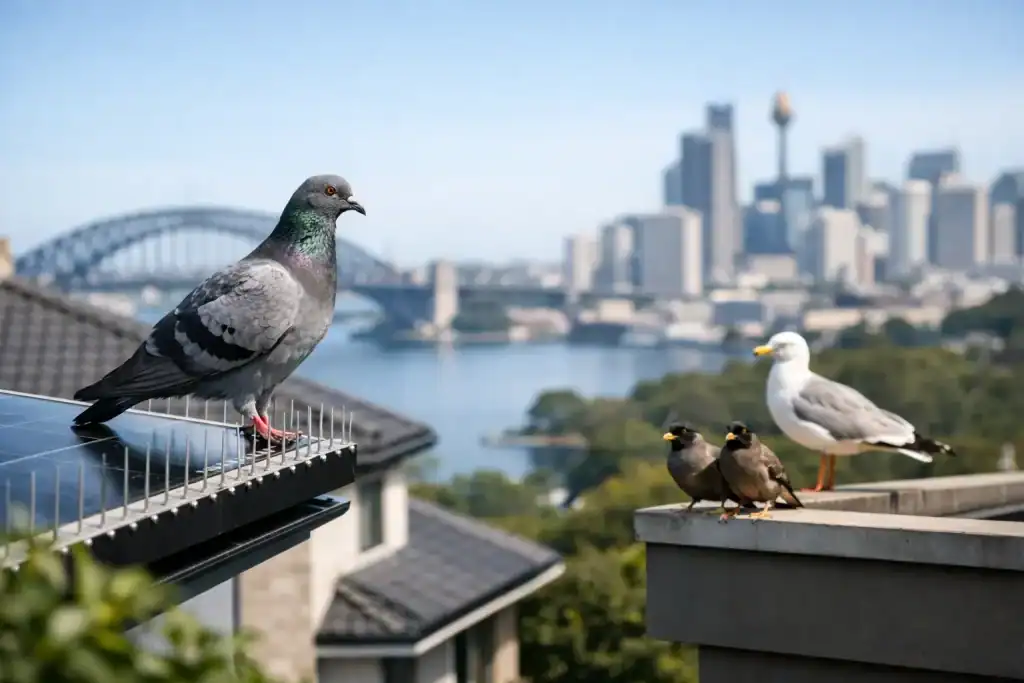
Pigeons on a shop awning, mynas nesting in a roof void, seagulls turning a bin area into a mess – bird problems rarely stay minor for long. Bird control Sydney property owners choose needs to do two things well: solve the immediate issue and prevent the same birds from coming back, all without creating unnecessary risk for children, pets, customers, or native wildlife.
That balance matters. A quick fix might scare birds off for a day or two, but it will not address why they settled there in the first place. Effective bird management looks at the species involved, the nesting or roosting site, the level of health risk, and the safest way to exclude or deter them for the long term.
Why bird problems need more than a quick scare-off
Many people try the obvious options first – a plastic owl, a shiny strip, a hose, a bit of noise. Sometimes these methods help briefly, especially when birds have only just started visiting. Once birds are established, though, they adapt quickly. If a site offers warmth, shelter, food scraps, water, or a safe ledge to roost on, they tend to return.
This is where professional bird control differs from basic deterrents. The goal is not simply to move birds on for an afternoon. It is to make the property less attractive and less accessible in a way that is humane, practical, and suitable for the building.
For homes, that may mean stopping nesting in solar panel cavities, roof spaces, balconies, or gutters. For commercial and strata properties, it often involves loading docks, signage, warehouse beams, food service areas, bin enclosures, and shared rooftops. Each setting has different risks, which is why a one-size-fits-all approach usually fails.
Common pest birds in Sydney
Not every bird around a property is a pest, and not every species can be managed the same way. In Sydney, the most common nuisance birds include feral pigeons, Indian mynas, sparrows, and in some areas seagulls. Their behaviour matters because it affects the right treatment.
Pigeons often roost on ledges, roofs, air conditioning units, and under solar panels. They leave droppings that stain surfaces, create slip hazards, block gutters, and accelerate wear on buildings. Mynas are notorious for nesting in roof cavities, wall gaps, vents, and other sheltered spots. They are noisy, aggressive toward native birds, and persistent once they have claimed a nesting area.
Seagulls are a different challenge again. They are often drawn to food waste, open bins, outdoor dining areas, and waterfront commercial sites. If rubbish handling is poor, seagull activity tends to increase fast.
A proper inspection should identify the species before any work begins. That is not just good practice. It helps avoid ineffective treatments and protects native wildlife that should never be harmed or displaced unlawfully.
What bird activity can do to your property
The obvious issue is mess, but the impact usually goes further than that. Bird droppings are acidic and can damage painted surfaces, metal, roofing materials, pathways, and outdoor furniture over time. Nesting material can block drainage points and gutters, increasing the chance of water overflow during heavy rain.
There is also the health side. Droppings, feathers, and nesting debris can affect air quality and hygiene, especially in roof spaces, commercial premises, food-related businesses, and high-traffic shared areas. Where birds roost in large numbers, odour and noise become ongoing complaints.
For strata and commercial properties, reputation matters as much as maintenance cost. Customers notice birds clustered above entryways, droppings near seating, or feather build-up around common areas. It can make a site feel poorly managed even when everything else is in good order.
Bird control Sydney properties often need most
The most effective solution depends on where birds are landing, nesting, and feeding. In many cases, the answer is exclusion rather than repeated removal. If birds cannot access the preferred spot, the problem is far less likely to continue.
Bird proofing may involve netting to block access to larger voids and open structural areas, spikes on ledges and beams, mesh around solar panels, or sealing entry points where mynas and sparrows are nesting. For some sites, habitat modification is just as important. That can mean improving bin management, removing food sources, reducing standing water, or trimming back access points near roofs and balconies.
There is a trade-off here. The cheapest visible deterrent is not always the best long-term value. A poorly installed system can look untidy, fail quickly, or simply push birds a few metres away. A well-planned solution should suit the building, stay effective in weather, and remain safe around residents, staff, visitors, and pets.
Safe and environmentally responsible bird management
Families and property managers are right to ask how bird control is carried out. If there are children playing outside, pets in the yard, or shared common areas, the method matters as much as the result.
Environmentally responsible bird control focuses on humane exclusion, deterrence, and prevention. That means reducing access to roosting and nesting spots rather than relying on harsh, broad treatments. It also means taking care around native species, which may require a different response altogether.
This is especially important in suburban areas where homes back onto trees, bushland, or coastal zones. You need a technician who can tell the difference between a pest bird issue and a wildlife matter, then recommend a response that is both effective and responsible.
For many households and businesses, that reassurance is a major part of the service. People want the birds gone, but they do not want heavy-handed methods that create a new problem.
When to call a professional
If birds are only passing through, basic housekeeping and minor deterrents may be enough. If they are nesting, roosting daily, damaging the property, or returning no matter what you try, it is time for a proper inspection.
Professional help is usually worth it when you are dealing with repeated pigeon activity, birds under solar panels, noise in the roof, droppings building up around entry points, or complaints in a strata or commercial setting. These are not just annoyances. They are signs that birds have established a pattern and the property now supports that behaviour.
A qualified technician should explain what species is involved, where the access points are, what treatment is suitable, and what results you can realistically expect. Clear communication matters. So does transparency on pricing, timing, and whether any follow-up work will be needed.
What to expect from a good bird control service
A reliable service starts with inspection, not guesswork. The technician should assess where birds are entering, nesting, feeding, and resting, then recommend a plan suited to the site. On a family home, that may focus on quiet, low-disruption proofing. On a commercial property, it may need to account for compliance, customer access, and business hours.
Good bird control is also preventive. Removing nests without fixing the access point often leads to a repeat job. The stronger approach is to pair immediate action with proofing that reduces the chance of another infestation.
This is where local experience helps. Properties across the Northern Beaches, Inner West, North Shore, and Eastern Suburbs can face different pressures depending on building style, surrounding vegetation, coastal exposure, and nearby food sources. A local team that understands those conditions can usually identify patterns faster and recommend more practical solutions.
Clean & Green Pest Control takes that approach by focusing on safe, effective treatments and wildlife-conscious prevention, rather than using harsh methods where a smarter exclusion strategy will do the job better.
How to reduce bird activity between visits
There are a few simple habits that help keep bird pressure down. Keep bins closed, clean up food scraps promptly, avoid leaving pet food outside, and check for gutter blockages or roof gaps that create shelter. If you have solar panels, periodic inspection is worthwhile because pigeons can settle underneath before the problem becomes obvious.
For strata managers and businesses, waste control and maintenance schedules make a real difference. Birds are opportunists. If one area consistently offers food, water, or shelter, they will keep testing it.
The main thing is not to wait until a small nuisance becomes property damage or a hygiene complaint. Bird issues are usually easier and less costly to manage when dealt with early, before nesting patterns become established. A well-protected property is not one that never attracts birds. It is one that does not give pest birds a reason to stay.