
Do I Have Termites? 4 Warning Signs Sydney Homeowners Should Never Ignore
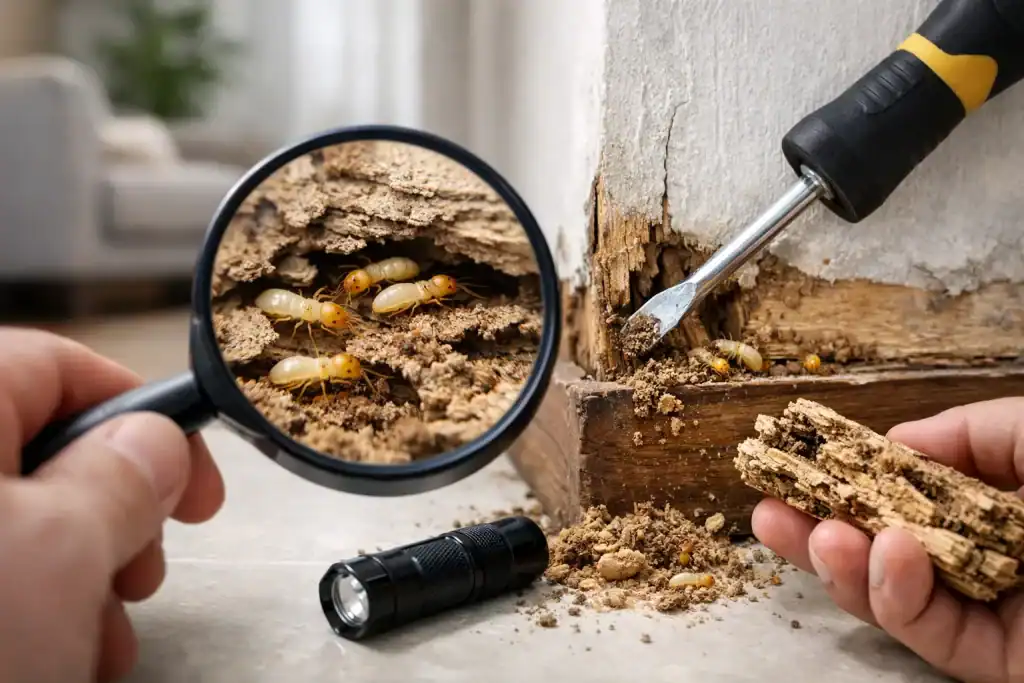
Hearing a faint tap in the wall, spotting odd marks on timber, or finding a few winged insects near a window is enough to make any homeowner ask, do I have termites? It is a fair question, and one worth taking seriously. Termites often stay hidden until damage is already underway, which means the small clues around your home matter more than most people realise.
In Australia, termites are not a rare problem or a seasonal nuisance you can ignore for a few weeks. They are a year-round risk, especially in areas with warm conditions, moisture, and plenty of timber around homes and gardens. The challenge is that termite activity can look harmless at first. What seems like a bit of peeling paint or a crack in wood can sometimes point to something much bigger happening underneath.
Do I have termites or is it something else?
That is usually the first hurdle. Not every hole in timber means termites, and not every insect with wings is a termite. Wood can swell from moisture, ants can tunnel through already damaged timber, and age alone can leave joinery looking rough. The trick is looking at the pattern, not just one sign in isolation.
Termites are drawn to cellulose, which is found in timber, paper, cardboard, and some building materials. They work from the inside out, so visible damage often appears late. If the surface of timber looks normal but sounds hollow when tapped, or gives way more easily than it should, that is more concerning than a surface scratch or dent.
Flying termites are also commonly confused with flying ants. Both can appear around lights or windows, especially after warm, humid weather. Termites usually have straight antennae, a broader waist, and four wings of equal length. Ants have bent antennae, a pinched waist, and wings that are uneven in size. Most homeowners will not study them under a magnifying glass, and that is exactly why identification can be tricky.
The most common signs of termites in a home
One of the clearest warning signs is mud tubing. Termites build narrow mud tunnels along walls, brickwork, piers, subfloors, or foundations to travel while staying protected from light and dry air. These tubes can look like dried dirt stuck to a surface. If you see them, treat that as a strong warning sign rather than something to scrape off and forget.
Timber damage is another common clue, but it does not always look dramatic. Doors may start sticking, floorboards may feel uneven, skirting boards may sound hollow, and painted timber may bubble or ripple. Because termites often eat the softer parts of wood and leave a thin outer layer behind, the surface can stay intact while the inside is badly compromised.
Discarded wings can also tell a story. After swarming, reproductive termites shed their wings. You might find small piles near windows, doors, or light fittings. A swarm does not always mean your home is infested internally, but it does mean termites are active nearby and the property should be checked properly.
There is also the less obvious sign of unexplained moisture. Termites are attracted to damp conditions, so leaks under sinks, poor drainage, blocked gutters, or ventilation problems in subfloors can all increase risk. Moisture itself does not prove termite activity, but it does create the kind of environment termites like.
Where termites usually hide
Termites are good at staying out of sight. That is why a quick glance around the living room is rarely enough. They often enter through cracks in slabs, gaps around pipes, expansion joints, weep holes, or timber that is in direct contact with soil. Once inside, they can move through wall cavities, roof voids, subfloors, and structural timber without being obvious from day to day.
The areas worth paying close attention to include skirting boards, door frames, window frames, timber decking, pergolas, fences, and any stored timber or cardboard near the house. Bathrooms, laundries, kitchens, and other areas with plumbing are also worth checking because moisture can attract activity.
If you live in an older property, have had water damage before, or have garden beds and mulch sitting high against external walls, your risk can be higher. That does not guarantee termites are present, but it does mean small warning signs should not be brushed off.
What termite damage can look and feel like
Many people expect termite damage to be obvious, but early damage often is not. A wall may look slightly blistered. A skirting board may crumble under light pressure. A floor may sound different underfoot in one section of the room. Sometimes the first sign is a door or window that suddenly becomes hard to open because the surrounding timber has shifted.
If you tap exposed timber and it sounds papery or hollow, that can be a concern. If you press gently on damaged-looking wood and it flakes or collapses, stop there. Disturbing active termites can cause them to retreat and find another path, which makes professional detection harder.
There is also a difference between old damage and active infestation. A piece of timber may have termite galleries from a previous issue that has already been treated, or it may contain live termites now. Without a proper inspection, it is difficult to know which one you are looking at. That is why guessing can become expensive.
What to do if you think you have termites
The first step is simple – do not spray them with household insecticide. It seems logical, but it can do more harm than good. A quick spray may kill the visible termites while the colony remains active elsewhere. It can also scatter them deeper into the structure and make the source harder to track.
Avoid pulling apart damaged timber or knocking down mud tubes. Photos are useful, and so is noting exactly where and when you found the signs. If you have seen winged insects, collect a sample if you can do so safely. This can help with identification.
The next step is arranging a professional termite inspection. A proper inspection looks beyond the obvious signs and checks the conditions that allow termite activity in the first place. That includes moisture issues, vulnerable entry points, hidden risk areas, and whether there are signs of current or past infestation.
For families, pet owners, and property managers, this matters for another reason as well. Termite treatment is not just about killing insects. It is about protecting the building while choosing an approach that is effective and sensible for the people, pets, and wildlife around it.
Why a professional inspection matters
When homeowners ask, do I have termites, what they usually want is certainty. Unfortunately, termites are experts at denying you that with a visual check alone. Professional inspections use experience, specialised tools, and a systematic process to assess areas most people either cannot access or would not know to examine closely.
An inspection can confirm whether the signs point to termites, another timber pest, moisture-related deterioration, or a different issue entirely. It can also help identify how termites may be getting in and what needs to change to reduce the risk of reinfestation.
That second part is important. Even the best treatment plan is stronger when paired with prevention. If leaking taps, poor drainage, timber offcuts under the house, or garden beds bridging termite barriers are left alone, the property can stay vulnerable.
Can termites be treated safely around families and pets?
This is one of the most common concerns, and rightly so. Many households want strong termite protection without filling the home or garden with unnecessary harsh chemicals. The good news is that treatment options have improved significantly, and the right solution depends on the property, the construction type, the level of activity, and the surrounding environment.
A reputable pest professional should explain what they have found, what treatment they recommend, why it suits the situation, and what precautions are needed. Clear communication matters. So does choosing a provider who understands how to balance effective termite control with family-safe and environmentally responsible practice.
That is a big reason many local homeowners choose specialist teams such as Clean & Green Pest Control when they want straightforward advice and treatment options that take children, pets, and native wildlife into account.
When it is urgent and when it can wait
If you have seen mud tubes, damaged timber that sounds hollow, live termites, or a swarm indoors, treat it as urgent. The same goes for any sign of structural timber weakening. Waiting to see if it gets worse is rarely a smart strategy because termites do not take a break while you decide.
If your concern is based on risk factors rather than clear evidence, such as recent moisture issues or a neighbour having termite problems, it is still sensible to book an inspection soon. Early detection is always cheaper and less disruptive than major repairs.
A helpful rule is this: if the question do I have termites has crossed your mind more than once, there is enough uncertainty to justify a proper check. Peace of mind is valuable, but catching activity early is even better.