
Do I Need a Termite Barrier or Monitoring System?
You usually start asking, do I need a termite barrier or monitoring system, after seeing one unsettling sign – a mud tube near the slab, a soft skirting board, or a neighbour mentioning they’ve had termites. It’s a fair question, because both options can protect your home, but they do different jobs. Choosing the right one depends on your home’s construction, your termite risk, and how much ongoing protection you want.
For most homeowners, this is not a matter of picking the “better” system in general. It’s about choosing the approach that suits the property in front of you. A brick veneer home on a slab, a house with subfloor access, and a strata complex with shared garden beds may all need something different.
Do I need a termite barrier or monitoring system? Start with the difference
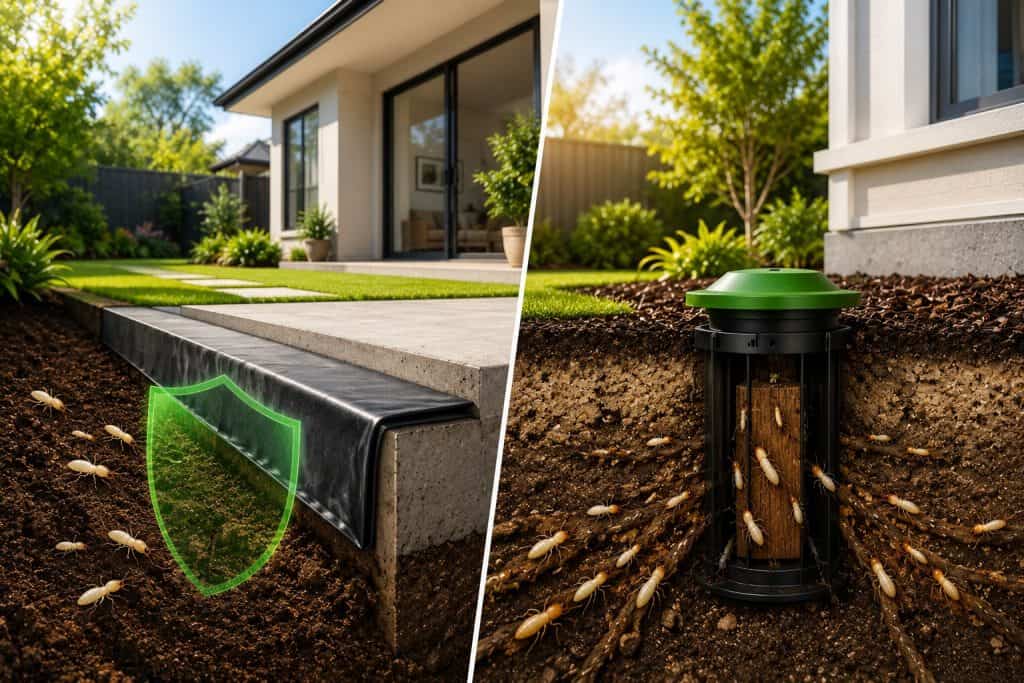
A termite barrier is designed to stop or deter termites from entering the structure. Depending on the type, it may be a chemical treatment in the soil, a physical system built into construction, or a combination of the two. The aim is prevention at the point where termites are most likely to gain access.
A monitoring system does not physically block termites. Instead, it uses stations placed around the property to detect termite activity early. Some systems can then be converted into a treatment response, depending on the product and the level of activity found.
That distinction matters. A barrier is mainly about preventing entry. Monitoring is mainly about early warning and managed response. Both can be effective, but they protect in different ways.
When a termite barrier makes more sense
A termite barrier is often the stronger choice when your goal is to create a defined layer of protection around the home. If you have a property with known termite pressure, previous termite history, or construction features that make concealed entry more likely, a barrier can offer more direct defence.
Homes with slab edges, expansion joints, plumbing penetrations and garden beds close to the house can all present entry points. In these cases, a professionally installed barrier can reduce the chance of termites reaching structural timber before anyone notices them.
Barriers are also worth serious consideration if you want less reliance on detection timing. With monitoring, termites still need to find the station or be discovered during inspection. With a well-installed barrier, the protection is focused around the building itself.
That said, barriers are not a once-and-forget solution. Soil can be disturbed by landscaping, drainage works, paving changes, plumbing repairs or even enthusiastic gardening. Over time, those changes can affect how complete the protection remains. A barrier still needs regular inspection.
When a monitoring system may be the better fit
Monitoring systems can be a very sensible option where a full barrier is not practical, not cost-effective, or not possible without major disruption. That can happen on properties with difficult access, existing hard surfaces, complex layouts, or environmental sensitivities where a lower-tox, targeted approach is preferred.
They also suit homeowners who want continuous oversight of termite activity around the block, not just at the building line. On some sites, termites are active in retaining walls, trees, fences or stumps before they move to the house. Monitoring can pick up this activity earlier and help guide a response before damage occurs.
For families who are especially conscious about chemical use, monitoring can feel like a more measured first step. It is not chemical-free in every case, especially if baiting becomes part of the treatment plan, but it can reduce the need for broad soil treatment where that is not the best fit.
The trade-off is that monitoring depends on regular servicing and professional follow-up. If stations are installed and then ignored, they lose much of their value. A monitoring system works best when it is part of an ongoing termite management plan, not a set-and-forget purchase.
The question is really about risk, not preference
If you are wondering whether you need a termite barrier or monitoring system, the right answer usually comes from a risk assessment rather than a personal preference for one product over another.
A few factors matter straight away. The first is how likely termite activity is in your area and on your site. Timber fencing, dense gardens, moisture issues, nearby bushland and a history of termite activity all increase risk. In parts of Sydney, especially where homes sit close to vegetation or older timber features, that risk can be higher than people realise.
The second is the design of the home. Some homes make termite entry easier to conceal. Raised floors, inaccessible subfloors, wall cavities, attached decks and poor slab edge visibility can all make early detection harder. In those cases, relying on monitoring alone may not provide enough protection.
The third is maintenance. Leaking taps, poor drainage, blocked weep holes and timber stored against the house all make any termite system less effective. No barrier or monitoring setup can compensate for conditions that actively attract termites.
Why some properties need both
In many cases, the smartest answer is not one or the other. It is both.
A barrier and a monitoring system can work together well. The barrier helps protect the structure at likely entry points, while monitoring stations watch for activity around the wider property. That combination can be particularly valuable on high-risk sites or homes with a history of infestation.
This approach also gives you more than one opportunity to catch a problem. If termite pressure builds near a fence line or tree stump, the monitoring system may pick it up. If termites attempt to move toward the house, the barrier provides another line of defence.
Not every home needs that level of coverage, but for some homeowners it offers the strongest peace of mind, especially where structural timber, renovations or difficult site conditions raise the stakes.
What about cost?
Cost matters, and it should be discussed honestly. A termite barrier often involves a higher upfront investment, particularly if soil treatment is extensive or access is difficult. Monitoring systems can be more accessible at the start, but they come with recurring servicing costs because they need to be inspected and maintained.
So the cheaper option depends on your timeframe. If you only compare installation, monitoring may look less expensive. If you compare total cost over several years, the gap may narrow. If you compare either option to major structural termite damage, both are usually far less costly than repairs.
The better question is not just “What costs less today?” but “What gives this property the right level of protection without unnecessary treatment?” That is where a site-specific recommendation matters.
Safety and environmental considerations
For many households, especially those with children, pets or a strong preference for lower-tox solutions, safety is a major part of the decision. That is completely reasonable.
Modern termite management does not have to mean harsh, blanket chemical use. Depending on the property, there may be options that balance effective protection with a more environmentally responsible approach. Monitoring systems, targeted baiting and carefully selected treatment methods can all play a role.
What matters most is that the recommendation matches the site and is clearly explained. A trustworthy termite plan should tell you what is being used, why it is being used, and what practical steps help protect your family, pets and the property.
This is one reason many homeowners prefer working with a local specialist such as Clean & Green Pest Control. Clear advice, low-tox thinking and honest recommendations make a real difference when you are making a long-term protection decision.
Don’t skip the inspection
Before deciding on any termite barrier or monitoring system, the first step should be a proper termite inspection. Without that, you are choosing a solution before confirming the actual risk, current activity and access points.
An inspection can identify whether termites are already active, whether there are conditions that attract them, and whether a barrier, monitoring, or a combined approach makes the most sense. It can also highlight practical issues like drainage faults, ventilation problems or landscaping changes that need attention alongside any treatment.
That matters because the best termite protection is never just a product. It is a system that includes inspection, prevention, maintenance and follow-up.
So, which one do you need?
If your home has clear entry risks, a history of termite issues, or construction that makes concealed attack more likely, a barrier often makes strong sense. If full barrier installation is difficult, or you want lower-impact ongoing surveillance around the property, monitoring may be the better fit. And if the risk is high enough, using both can be the most sensible option.
The safest decision is not based on guesswork or a standard package. It comes from understanding the property, the termite pressure around it, and the level of protection you want over time.
If you are weighing up the options, treat that uncertainty as a good reason to act rather than wait. A careful inspection and tailored advice now can spare you a far more stressful conversation later.