
The Hidden Health Risks of Rodents at Home
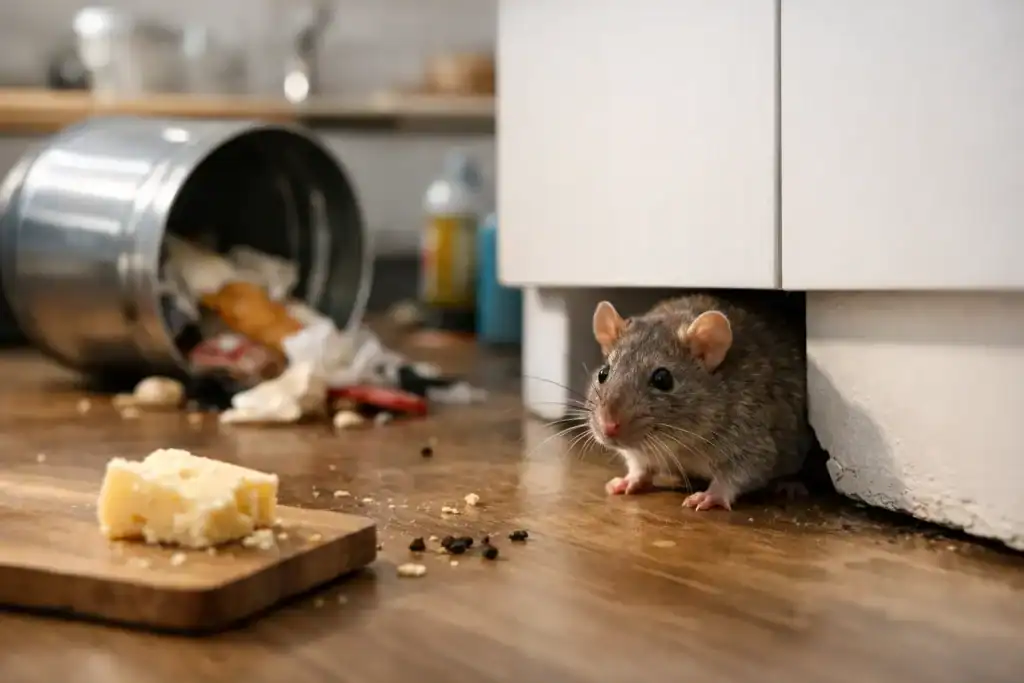
You do not need a full-blown infestation for rodents to become a health problem. A few droppings behind the fridge, scratching in the roof at night, or a chewed packet in the pantry can be enough to expose your household to the hidden health risks of rodents in family homes. For families, renters, and property managers, the issue is not just nuisance or property damage. It is the quiet way rats and mice can affect air quality, food safety, sleep, and overall wellbeing.
Why rodents are more than a household nuisance
Rodents are highly adaptable. They squeeze through tiny gaps, nest in roof voids and wall cavities, and feed on everything from pet food to pantry staples. Once inside, they leave much more than noise behind.
Their urine, droppings, hair, and saliva can contaminate surfaces and stored food. In enclosed parts of the home such as cupboards, subfloors, and ceiling spaces, these materials can build up over time. That matters because the health risk is often indirect. People are not always handling a rodent, but they may still breathe in contaminated dust or touch areas where rodents have been active.
Children are especially vulnerable because they spend more time on the floor, put hands and objects near their mouths, and may not notice early signs of contamination. Pets can also be affected, either through contact with droppings and nesting areas or by chasing and biting sick rodents.
The hidden health risks of rodents in family homes
The phrase the hidden health risks of rodents in family homes is accurate because many of the most serious issues do not look dramatic at first. You may not see a rat in broad daylight. You may only notice a musty smell, a cough that lingers, or unexplained food spoilage.
Airborne contamination and respiratory irritation
Rodent droppings and urine do not stay neatly where they fall. As they dry out, they can break down into fine particles that become part of household dust. In roof spaces, behind appliances, and inside storage areas, this can contribute to poor indoor air quality.
For people with asthma, allergies, or other respiratory sensitivities, rodent activity can make symptoms worse. Sneezing, wheezing, irritated eyes, and sinus flare-ups may become more common, particularly in homes where infestation has gone unnoticed for some time. Even where there is no diagnosed condition, ongoing exposure to contaminated dust is not something to ignore.
Food contamination you may not spot straight away
Rodents are not tidy feeders. They chew through packaging, leave droppings near food sources, and move through cupboards, benchtops, and appliances. A bag may look untouched from the front but have a small entry hole in the back. Fruit in a bowl, pet biscuits in the laundry, or cereal in a half-open box can all become contaminated.
The problem is not only what they eat. It is what they leave behind. Any food that may have been exposed to rodent urine, saliva, droppings, or gnaw marks should be treated as unsafe. This is one of the main reasons pantry infestations can become a household health issue very quickly.
Bacteria and disease transmission
Rodents are known carriers of harmful bacteria and pathogens. The exact risk level depends on the species, the environment, and how long activity has been present, but the concern is real. Surfaces contaminated by rodents can spread illness if they are not cleaned properly.
This becomes more relevant in kitchens, food storage areas, and homes with toddlers. A contaminated shelf, drawer handle, or pet bowl area can become part of everyday contact. In some cases, people increase the risk by vacuuming dry droppings or sweeping aggressively, which can send contaminated particles into the air.
Parasites that come with the rodents
Rodents can bring other pests with them, including mites, fleas, and ticks. Even after the rodents are removed, these parasites may remain in nesting areas, soft furnishings, or roof spaces. That means a rodent problem can become a broader pest management issue if not handled thoroughly.
This is one of the trade-offs with quick DIY approaches. Baits or traps may reduce rodent numbers, but if nesting sites, access points, and secondary pest risks are not addressed, the household may still be left with health concerns.
Stress, sleep disruption, and mental load
Not every health impact is infectious. Ongoing rodent activity can be genuinely stressful, especially for families. Scratching in the ceiling at night, fear of contamination in the kitchen, and worry about children or pets coming into contact with droppings can all affect sleep and peace of mind.
For some households, the emotional toll is underestimated. Parents often carry the extra burden of checking food, cleaning repeatedly, and wondering whether the problem is bigger than it appears. That strain matters, especially when it drags on for weeks.
Where the risk tends to build up inside homes
Rodents rarely stay out in the open. They look for warmth, shelter, food, and water, which is why certain parts of the home are more vulnerable than others.
Kitchens and pantries are obvious hotspots, but roof voids, garages, laundries, under-sink cupboards, and subfloors are just as important. Pet feeding stations are another common attractant. In cooler months, rodents often move indoors more aggressively, while in dense residential areas they may travel between neighbouring properties with ease.
In parts of Sydney such as the Northern Beaches, where homes may back onto bushland, reserves, or older fencing lines, rodent pressure can increase seasonally. That does not mean every home near green space will have a serious issue, but it does mean prevention and early detection matter more.
Signs families should take seriously
A single sign does not always mean a major infestation, but it should not be brushed off. Fresh droppings, scratching sounds at night, a strong musky odour, shredded paper or insulation, chew marks on food packaging, and greasy rub marks along walls are all worth attention.
It also helps to look for the less obvious signs. Is your pet unusually interested in one cupboard or wall cavity? Are food packets mysteriously damaged? Has someone in the home developed more frequent allergy-like symptoms without a clear cause? Sometimes the pattern tells the story before the rodents are seen.
Why DIY rodent control can create extra risk
There is a place for basic housekeeping measures, but DIY rodent control has limits. Many supermarket products focus on killing or trapping without addressing how rodents got in, where they are nesting, or what contamination has been left behind.
There is also a safety question. In family homes, the wrong bait placement can create risk for children, pets, and non-target wildlife. Dead rodents in inaccessible areas can lead to odour and hygiene issues. And if the infestation is larger than expected, DIY efforts often drag on while exposure continues.
A safer approach is one that combines removal with inspection, sanitation advice, and proofing recommendations. That is especially important in households trying to avoid unnecessary chemical use.
Safer ways to reduce rodent health risks
The best response is practical and measured. Remove accessible food sources by storing dry goods in sealed containers and keeping pet food secure. Clean up crumbs promptly, empty indoor rubbish regularly, and reduce clutter in garages, cupboards, and storage areas where rodents can nest.
Just as important, seal entry points where possible. Gaps around pipes, damaged vents, loose weather seals, and cracks near doors can all become access routes. If droppings are present, avoid dry sweeping or vacuuming them straight away. Careful cleaning methods matter because they reduce the chance of stirring contaminated dust into the air.
Where activity is ongoing, professional help is usually the fastest way to lower risk properly. A good pest professional will not just treat the symptom. They will identify pressure points around the property, explain what is happening in plain language, and recommend options that suit a home with kids, pets, or both. That family-safe, low-tox approach is why many households turn to specialists such as Clean & Green Pest Control when the problem goes beyond a one-off sighting.
When to act quickly
If you have seen droppings in food areas, heard repeated movement in the roof, found gnawed packaging, or noticed signs near a child’s play area or pet zone, it is worth acting sooner rather than later. The hidden health risks of rodents in family homes tend to grow when the problem is allowed to settle in.
A small issue can still be dealt with efficiently, but a long-running infestation usually means more contamination, more stress, and a more complex clean-up. Early action protects more than the building. It protects the people living in it.
A home should feel safe to cook in, sleep in, and let your children play in. If rodents are taking that confidence away, dealing with the cause properly is one of the simplest ways to restore it.