
Termite Barrier Versus Bait Stations
A termite problem rarely announces itself with perfect timing. More often, it starts with a soft skirting board, a door frame that suddenly feels hollow, or a routine inspection that uncovers activity where everything looked fine from the outside. When homeowners ask about termite barrier versus bait stations, they are usually trying to answer one practical question – what will protect the property best without creating unnecessary risk for the family, pets or garden?
The honest answer is that both systems can work well, but they do different jobs in different ways. The right option depends on the construction of the building, how termites are entering, the level of current activity, and how quickly you need control.
Termite barrier versus bait stations: the main difference
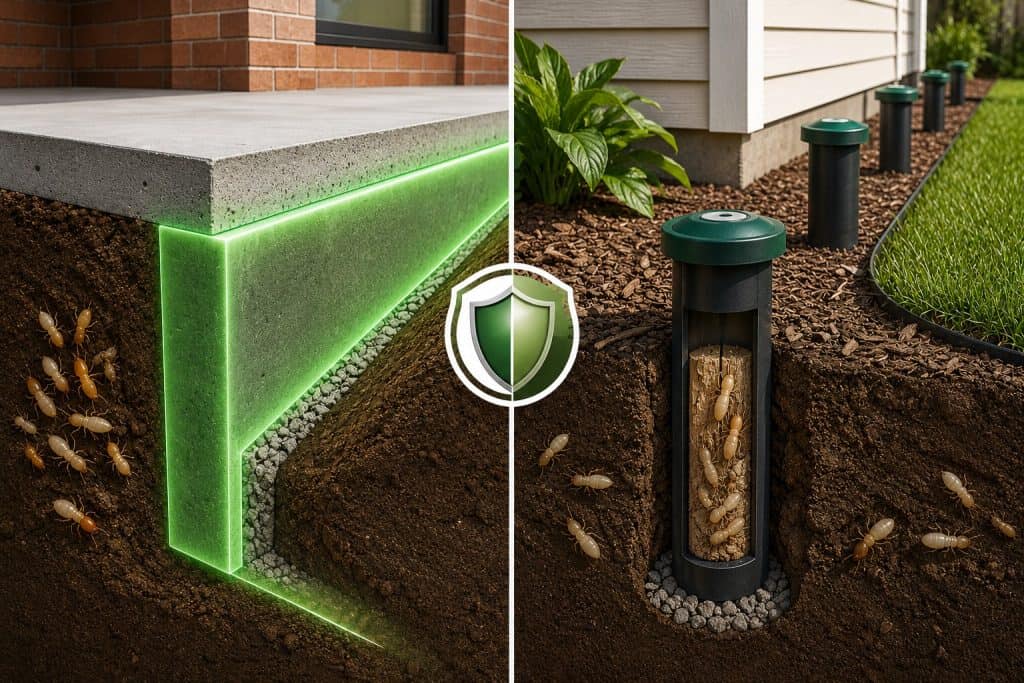
A termite barrier is designed to stop or intercept termites as they move from the soil to the structure. In most cases, this means a treated zone is created around or under parts of the home. The goal is immediate protection at likely entry points.
Bait stations work differently. They are placed in the ground around the property and rely on termites finding the bait, feeding on it, and carrying it back to the colony. Rather than blocking access at the structure, baiting aims to reduce or eliminate the colony over time.
That difference matters. A barrier is usually about creating a protective line. A baiting system is more about monitoring and colony control. Neither is automatically better in every situation.
When a termite barrier is the stronger option
For many homes, a termite barrier is chosen because it offers a more direct form of protection. If termites are already close to the structure, or if the property has clear access points around slab edges, piers or known entry zones, a barrier can provide a faster defensive response.
This approach often suits homeowners who want a clearly defined treatment zone and less reliance on termite foraging behaviour. If termites do not find a bait station quickly, the system can take longer to produce results. A barrier does not depend on termites locating a separate device in the yard before control begins.
Barriers can also make sense for homes with a history of termite pressure. In parts of Sydney where warm conditions and moisture issues can increase termite risk, a barrier may be the most practical way to reduce the chance of concealed entry into the building.
That said, barriers are not always simple to install. Some properties have construction features that limit access to the full perimeter. Paths, retaining walls, extensions, drainage lines, gardens and internal slab design can all affect how complete the treated zone can be. A barrier is only as good as the coverage achieved.
The trade-off with barriers
The main advantage is speed and structure-focused protection. The trade-off is that installation can be more invasive and more dependent on property layout. In some cases, drilling or trenching is needed to reach the right treatment areas.
For environmentally conscious households, the type of product used also matters. Low-tox and carefully targeted termiticide options can reduce unnecessary exposure, but the treatment still needs to be applied correctly by a licensed professional. Done properly, the aim is to protect the home while keeping the process as safe and contained as possible.
When bait stations are the better fit
Bait stations are often a strong choice where a traditional barrier would be difficult to install or incomplete. If the home has complex landscaping, inaccessible slab sections, or construction features that make continuous treatment hard to achieve, baiting can offer a flexible alternative.
They are also useful when the goal is ongoing monitoring as well as treatment. Stations can show whether termites are active around the property before damage becomes obvious inside. For owners who want a system that is checked regularly and adjusted over time, baiting can be a sensible long-term strategy.
Another reason some people prefer bait stations is the lower volume of active ingredient used across the site. For families focused on environmentally responsible pest management, that can be appealing. The treatment is contained within the stations rather than distributed through a broad soil zone.
Still, patience is part of the process. Baiting is rarely the quickest answer if there is urgent structural risk. Termites must locate the station, feed, and transfer the bait through the colony. That can be highly effective, but it does not happen overnight.
The trade-off with baiting
The main advantage is flexibility and lower overall chemical footprint. The trade-off is time. Bait stations need monitoring, maintenance and professional follow-up. If they are installed and forgotten, they lose much of their value.
Baiting also works best when there is a proper inspection plan behind it. You are not just putting stations in the ground and hoping for the best. You are building a managed system that needs regular checks and informed decision-making.
Which option is safer for children, pets and gardens?
This is one of the most common concerns, and rightly so. Any termite treatment should be chosen with the household in mind.
A professionally installed barrier can be very safe when the correct product is used and application is tightly controlled. The treatment is usually placed in soil or subfloor zones, not across general living areas. Reputable providers explain where the product goes, how much is used, and what precautions are needed during and after treatment.
Bait stations can also be a good fit for family homes because the active ingredient is enclosed within tamper-resistant stations. That said, they still need proper placement and maintenance, especially where pets like to dig or children play in garden beds.
For most households, the safest choice is not just about barrier versus bait stations. It is about the quality of the assessment, the products selected, and whether the provider is focused on effective treatment without overusing chemicals.
Cost matters, but so does the kind of protection you are buying
Upfront cost often pushes people towards one option or the other, but price alone can be misleading.
A termite barrier may involve a higher initial spend because of the labour required to treat the perimeter properly. In return, you are generally paying for immediate structural protection.
Bait stations may look more manageable at the start, but they usually come with ongoing inspection and servicing costs. Over several years, the total investment can be similar or even higher depending on the number of stations, the level of termite pressure and how often monitoring is needed.
The better question is not which is cheaper. It is which system fits the risk profile of the property and gives you reliable protection over time. A lower-cost solution is poor value if it leaves blind spots around the home.
Why some properties need both
There are situations where termite barrier versus bait stations is the wrong way to frame the decision. Some homes benefit from a combined strategy.
For example, a property might need a barrier in the most vulnerable structural areas and bait stations around sections where soil treatment is limited by access or construction. In active infestations, baiting may be used to target colony behaviour while a barrier helps defend the building itself.
This layered approach can be especially useful on larger sites, strata properties, or homes with a history of termite activity. It allows treatment to be tailored instead of forcing the property into a one-size-fits-all method.
The most important step happens before treatment
Before choosing any system, the property needs a thorough termite inspection. That inspection should identify current activity, damage, moisture issues, entry risks and construction features that affect treatment options.
Without that groundwork, it is easy to choose a solution that sounds good on paper but does not suit the actual building. A well-built termite plan is always site-specific.
For homeowners and property managers, this is where clear advice matters. You should be told what was found, why a certain method is recommended, what results to expect, and what maintenance is required. Straightforward communication is part of good termite management, not an optional extra.
Clean & Green Pest Control takes that approach because termite work should never feel vague or overcomplicated. People need practical answers, honest recommendations and a treatment plan that protects the property without creating unnecessary concern at home.
If you are weighing up termite protection, the best choice is the one that fits your building, your level of risk and your comfort with ongoing monitoring or treatment. A good termite system is not the one with the flashiest sales pitch. It is the one that quietly does its job, year after year, while your home stays exactly as it should – solid, safe and stress-free.