Best Termite Prevention Methods Australia
A termite problem rarely starts with a dramatic warning sign. More often, it begins quietly – behind a wall, under a floor, or in damp timber you do not check every day. That is why the best termite prevention methods Australian homeowners rely on are not about one magic treatment. They are about reducing risk from several angles, early, and keeping that protection in place.
In Sydney, and especially around the Northern Beaches, termites are a genuine property risk because our climate gives them what they like – moisture, warmth and plenty of timber structures. If you have children, pets, tenants, or a busy household, prevention matters even more. You want your home protected without turning it into a chemical zone. The good news is that effective termite prevention can be practical, low-disruption and, when planned properly, far more affordable than repairing damage later.
Best termite prevention methods in Australia start with moisture control
If there is one issue that consistently attracts termite activity, it is excess moisture. Termites are drawn to damp conditions because they need humidity to survive. Leaking taps, poor drainage, blocked gutters, rising damp and under-house ventilation problems can all make a property more inviting.
This is where prevention often gets overlooked. People focus on the timber, but not the water feeding the risk. Fixing leaks promptly, ensuring downpipes move water away from the home, and keeping subfloors well ventilated can make a real difference. In bathrooms, laundries and kitchens, even small plumbing leaks should never be left to linger.
For many homes, especially older properties, moisture issues are not obvious from the surface. A professional inspection can help identify areas where condensation, pooling water or poor drainage are increasing termite pressure without the owner realising it.
Keep timber and cellulose away from the house
Termites do not care whether the timber is structural, decorative or sitting in a forgotten pile beside the fence. If it contains cellulose and stays damp enough, it can become a food source. One of the simplest prevention steps is also one of the most effective – remove termite-friendly materials from around the home.
That means not storing firewood against external walls, not leaving timber offcuts under the house, and not letting cardboard boxes build up in damp storage areas. Garden mulch is another area where balance matters. Mulch is not automatically a termite cause, but if it is piled too high against the slab edge or weep holes, it can trap moisture and reduce visibility during inspections.
Landscaping should help you monitor the building, not hide it. Keeping garden beds, soil and mulch below weep holes and avoiding direct timber-to-soil contact around decks, steps and fences are sensible long-term measures.
Physical and chemical barriers both have a place
When people ask about the best termite prevention methods in Australia, barriers usually come up quickly. That is because termite barriers are one of the strongest protective measures available when professionally selected and installed.
Physical barriers are designed to make termite entry more difficult and more visible. These are often installed during construction, which makes them ideal for new builds and major renovations. Their strength is longevity and reduced reliance on ongoing chemical performance, but they need correct installation and they are not always practical to retrofit into existing homes.
Chemical barriers are more commonly used for established homes. A qualified technician applies a treated zone around the structure so termites are either repelled or controlled as they move through it, depending on the product used. The right option depends on the construction type, access around the property, soil conditions and the treatment goals.
For families and pet owners, product choice matters. Modern termite management can include lower-tox options and more targeted treatment methods than many people expect. The safest and most effective approach is always one tailored to the site, rather than a one-size-fits-all spray.
Regular termite inspections are not optional
A common mistake is assuming prevention means treatment only. In reality, inspection is a core part of prevention. Even a well-protected property should be checked routinely because barriers can be bridged, moisture conditions can change and termite pressure in the area can shift over time.
Australian Standards generally recommend at least annual termite inspections, and in higher-risk areas or homes with a history of termite activity, more frequent checks may be wise. This is especially relevant for properties near bushland, with garden-heavy boundaries, older timber elements, or known drainage issues.
An inspection is not just about finding active termites. It is about spotting the conditions that make an attack more likely. That might include hidden leaks, subfloor ventilation problems, concealed entry points, timber debris, or landscaping that blocks visual inspection zones.
For strata managers, landlords and commercial property owners, routine inspections also support better maintenance planning. They help reduce the risk of expensive surprises and show a more responsible approach to protecting the asset.
Baiting systems can work well when used properly
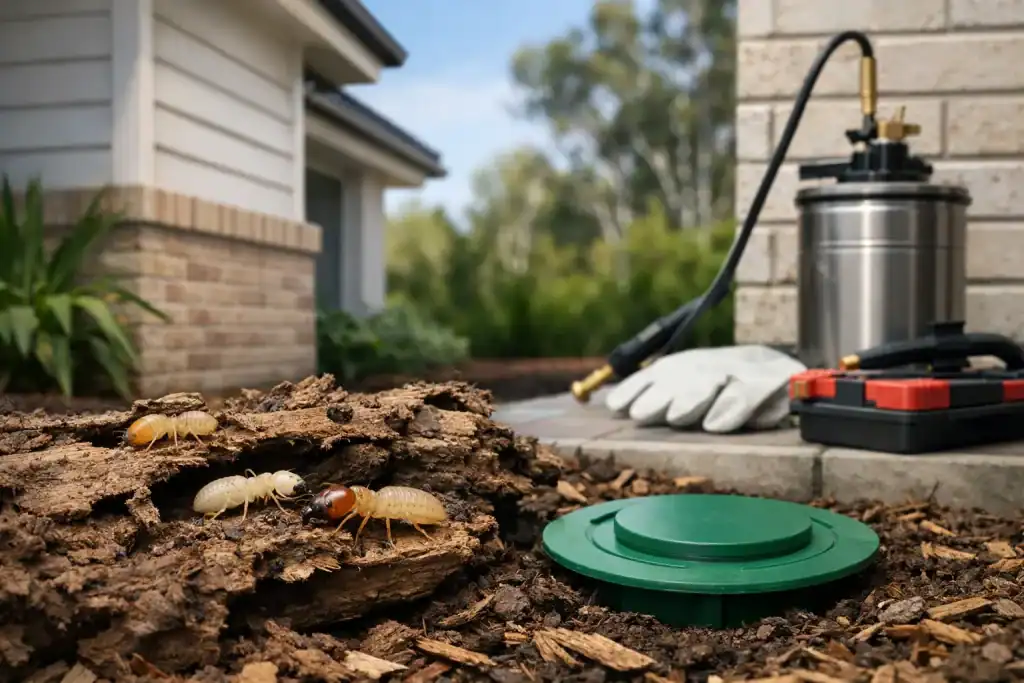
Termite baiting systems are often a strong option where a full chemical barrier is not suitable or where ongoing monitoring is preferred. These systems use stations placed around the property to intercept termite activity. Once termites feed, a bait can be introduced that affects the colony over time.
The biggest advantage of baiting is that it can be less invasive and highly strategic. It can also suit properties where construction type, drainage, paving or limited access make traditional barriers harder to install. But baiting is not a set-and-forget solution. It relies on regular monitoring and skilled management.
That trade-off is worth understanding. A baiting system can be very effective, but only when it is maintained consistently. If inspections are missed, protection can weaken. For owners who want active oversight and a flexible prevention plan, baiting can be an excellent fit.
Good building maintenance is termite prevention
Many termite issues begin with a maintenance issue that seemed minor at the time. Cracked roof tiles, overflowing gutters, damaged seals, poor drainage near footings and untreated timber decay all create opportunities for termites to move in or remain undetected.
Doors and windows that suddenly become hard to close, bubbling paint, sagging skirting boards and unexplained timber softness should never be ignored. These signs do not always mean termites, but they do justify investigation.
Access is another practical point. If an inspector cannot clearly assess the perimeter because of stored items, dense garden growth or built-up soil, your prevention system is weaker. Homes need clear inspection zones. It is a small detail that can make a major difference.
New homes still need protection
A surprising number of owners think termite prevention is mainly an issue for old houses. New homes can absolutely be at risk. While modern construction may include a termite management system, that system still needs to be maintained, documented and checked.
Renovations can also unintentionally compromise existing protection. A new garden bed, path, pergola post or extension may bridge a barrier or create concealed entry points. If you have renovated recently, it is worth confirming that termite management has not been disrupted.
This is particularly important for property managers and buyers. A newer home should never be assumed termite-safe without proper records and current inspections.
The best approach is layered, not reactive
There is no single answer that suits every property, which is why the best termite prevention methods Australia property owners use tend to follow the same pattern. They combine moisture control, good maintenance, reduced timber contact, regular inspections and the right barrier or baiting system for the site.
Reactive treatment after termites are found is always harder. It can involve more damage, more disruption and more cost. Prevention gives you options. It lets you plan carefully, choose safer treatment methods where possible, and protect the people living or working on the property while reducing risk to pets and native wildlife.
For homes and businesses across Sydney, that layered approach is what delivers real peace of mind. At Clean & Green Pest Control, we see the strongest results when termite management is treated as an ongoing part of property care, not a once-off response to a scare.
If you are unsure where your risk sits, start with what you can control today – moisture, storage, garden levels and overdue maintenance – then back it up with a proper inspection. A quiet problem is still a problem, and termites are at their most expensive when they are left alone.