
Why Store-Bought Cockroach Bombs Rarely Work
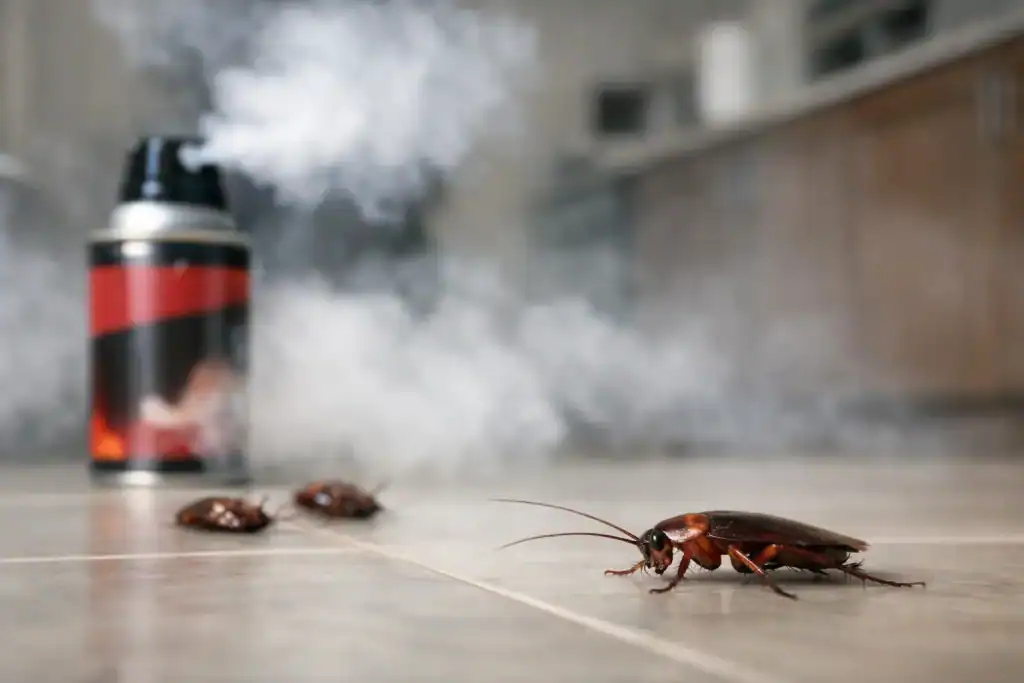
You set off a cockroach bomb, leave the house for a few hours, come back to a chemical smell and a few dead roaches on the floor – then a week later, they are back in the kitchen at night as if nothing happened. That is usually the moment people start asking why store-bought cockroach bombs rarely work, especially when the label promises whole-room control.
The short answer is that cockroach bombs are designed for broad exposure, but cockroaches are built for hiding. They spend most of their time tucked deep inside cracks, wall voids, under appliances, behind cupboards and around plumbing penetrations. A fogger might fill open air, but it often does very little in the exact places where roaches live, breed and shelter.
For households with children, pets or asthma concerns, there is another frustration too. You can end up spreading pesticide residue through the home without actually solving the infestation. That is a poor trade-off if the result is still ongoing cockroach activity.
Why store-bought cockroach bombs rarely work in real homes
Cockroach bombs, also called total release foggers, release insecticide into the air in a fine mist. On paper, that sounds effective. In practice, it is a blunt tool being used against a pest that survives by avoiding exposure.
Roaches do not line up in the middle of the room waiting to be treated. German cockroaches, one of the most common indoor species, prefer tight harbourages near food, warmth and moisture. That usually means the motor area behind the fridge, the cavity under the dishwasher, gaps in cabinetry, power points, hinges, pipe entries and the underside of benchtops. Foggers are weak at penetrating those spaces.
Even worse, a bomb can scatter the infestation. Instead of eliminating the colony, it may push roaches deeper into wall cavities or into neighbouring rooms and units. In apartments and strata properties, that can turn a local issue into a broader one.
There is also the egg problem. Many over-the-counter treatments do not reliably affect cockroach egg cases. So even if some adults die, the next generation can hatch soon after and restart the cycle.
The main reasons bombs fail
They do not reach the nest
This is the biggest issue. Effective cockroach control depends on reaching harbourages and travel paths. Bombs mostly treat exposed surfaces and airborne space. Roaches spend very little time there.
If you are seeing them during the day, the infestation is often already well established. That means there are likely many more hidden out of sight than the few you notice on the floor or wall.
They can repel instead of eliminate
Some products irritate cockroaches before delivering a lethal dose. That sounds minor, but it matters. A disturbed roach can retreat further into inaccessible areas, making follow-up control harder.
This is one reason DIY attempts sometimes seem to make the problem worse. The treatment has not increased the population, but it has changed where the roaches are hiding and how they move through the property.
They do not deal with the source
Cockroaches need food, water and shelter. Bombs do not fix leaking taps, condensation, grease build-up behind appliances, food debris under kickboards or cluttered storage areas. If those conditions remain, the home is still suitable for roaches.
Pest control works best when treatment and prevention happen together. A product alone is rarely enough if the environment still supports the infestation.
They can miss resistant populations
Cockroaches are remarkably adaptable. In many areas, some populations show resistance to common active ingredients used in retail products. That means the bomb may expose roaches to pesticide without delivering a reliable kill.
Repeated use of the same type of product can make this worse over time. You spend more money, introduce more chemical residue and still do not get control.
The safety issue people often underestimate
A store-bought bomb can sound convenient, but convenience is not the same as low risk. These products release pesticide across wide indoor areas, including places you may not want residue settling – kitchen surfaces, toys, pet bedding, food prep zones and soft furnishings.
Used incorrectly, foggers have also been linked to breathing irritation and contamination issues. In homes with babies, young children, pets or people with sensitivities, that matters. It is one of the reasons many families now prefer targeted, low-tox approaches over broad aerosol treatments.
There is also a practical safety issue. Bombs typically require careful preparation, switching off ignition sources and following re-entry times exactly. If instructions are rushed or misunderstood, the treatment can create more problems than it solves.
What works better than a cockroach bomb
If bombs are the wrong tool, what is the right one? Usually, it is a targeted treatment plan based on species, severity and location of activity.
Professional cockroach control often relies on gel baits, insect growth regulators, crack-and-crevice treatments, monitoring and sanitation advice. That combination works because it is aimed where roaches actually live.
Gel baits are particularly effective when used properly. Roaches feed on the bait, return to harbourages and can transfer the active ingredient to others in the population. That is very different from a fogger, which depends on direct exposure in open space. Baits turn the roaches’ behaviour against them.
Insect growth regulators can also help interrupt breeding by affecting immature stages. This matters in established infestations where simply killing visible adults will not be enough.
A proper treatment should also include inspection. Without identifying where the infestation is centred, it is easy to treat the wrong area and miss the real source.
Why inspection matters more than people think
Cockroach activity is often a symptom, not just a standalone issue. A technician may find moisture under a sink, hidden food build-up beneath appliances, gaps around pipework or access points from shared walls. In commercial kitchens and strata buildings, the source may not even be in the room where roaches are first seen.
That is why a one-size-fits-all retail product struggles. It has no ability to assess the property, track nesting zones or adapt the treatment.
For homes and businesses across Sydney, especially in warmer months, cockroach pressure can build quickly. The properties that get lasting results are usually the ones that combine treatment with practical corrections – sealing entry points, managing moisture, improving storage and keeping high-risk areas clean and dry.
Why DIY success is often short-lived
People do sometimes get a temporary drop in numbers after using a bomb. That part is real. You may kill off a few exposed insects and feel like the issue is improving.
The problem is that temporary relief can delay proper treatment. While the visible activity dips, egg cases continue developing and hidden harbourages remain active. By the time the infestation is obvious again, it may be larger and more dispersed.
This is especially common with German cockroaches because they breed quickly and prefer indoor environments where food and water are readily available. A short-term knockdown is not the same as control.
If you are in a rental, strata complex or shared commercial site, DIY fogging can also complicate things by pushing cockroaches into adjoining spaces. Then everyone ends up treating symptoms instead of addressing the main infestation.
A safer, more effective approach
The most effective cockroach control is targeted, measured and family-aware. That means using the least product necessary in the right locations, choosing lower-tox methods where suitable and focusing on long-term prevention as much as immediate removal.
For many households, that approach feels more sensible than filling the home with airborne pesticide and hoping it reaches behind the fridge or inside a wall cavity. It is also far easier to explain and manage when children and pets are part of the picture.
At Clean & Green Pest Control, this is exactly why targeted treatment plans matter. Good pest control is not about using the strongest chemical or the loudest product claim. It is about understanding pest behaviour, applying treatment carefully and helping the property stay less attractive to pests after the visit.
If cockroaches keep coming back after a bomb, that is not a sign you need a bigger bomb. It is usually a sign the problem is hidden deeper than the product can reach, and that a more precise approach will save you time, money and worry in the long run.