
Termite Treatment Sticker: What It Means
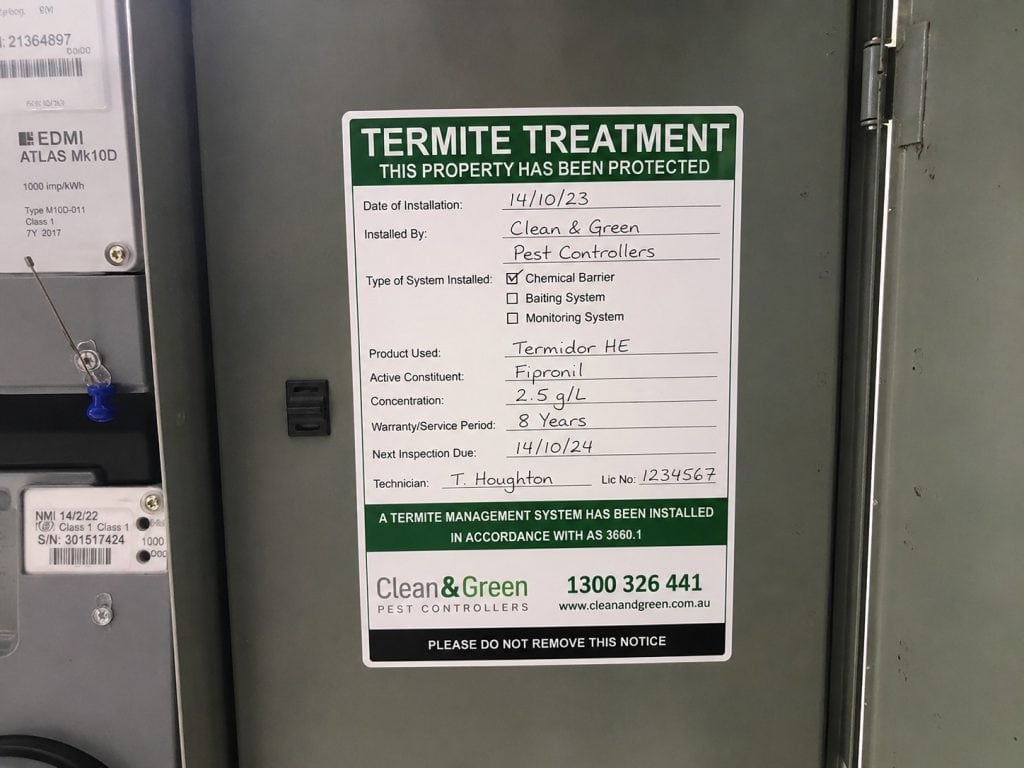
A termite treatment sticker can look like a small detail, but it often tells an important part of a property’s pest history. If you’ve spotted one in a meter box, under a sink, inside a cupboard or near a garage wall, it’s natural to wonder whether your home is protected, overdue for inspection, or still at risk. The short answer is this: the sticker matters, but it is never the whole story.
For homeowners, buyers, landlords and property managers, that distinction is where costly mistakes are often made. A sticker can confirm that some form of termite work was carried out. What it cannot do, on its own, is guarantee that the treatment is still active, correctly installed, or suitable for the current condition of the property.
What a termite treatment sticker is actually for
A termite treatment sticker is usually placed on site by a licensed pest professional after a termite treatment, baiting program, barrier installation or major inspection. Its job is practical. It gives anyone responsible for the property a quick reference point showing that termite-related work was done, when it was done, and sometimes what product or method was used.
In many cases, the sticker includes the treatment date, technician or company details, and a recommendation for the next inspection. Some also note the type of treatment, such as a chemical soil barrier, reticulation system, dusting, bait stations or a management program.
That’s useful information, especially if you’ve just moved in or inherited management of a property. It creates a starting point for the next conversation. But it should always be treated as a prompt to investigate further, not as proof that everything is fine.
What information should be on the sticker?
Not every sticker looks the same, but a good one should provide enough detail to identify what happened and when. In a well-documented property, you may see the treatment date, the company name, the technician’s licence details, the treatment type and an advised reinspection timeframe.
If the sticker is faded, incomplete or impossible to read, that in itself is worth noting. Missing detail makes it harder to verify whether the treatment aligns with current standards or whether routine follow-up inspections were ever completed.
A sticker is most helpful when it matches a written report or treatment certificate. If you have the paperwork as well, you’re in a much stronger position. The sticker helps you locate the record in time. The report explains the scope, limitations and recommendations.
Why a termite treatment sticker does not equal current protection
This is the point many people miss. Termite treatments do not last forever in a simple, set-and-forget way. Even high-quality systems need monitoring, maintenance and regular inspection.
A chemical barrier may degrade over time depending on the product used, soil type, drainage, landscaping changes and construction activity around the home. Bait stations require ongoing inspection and replenishment. Physical barriers can be compromised by renovations, slab penetrations, garden beds built up against walls or concealed entry points.
That means an old sticker might confirm that the property was treated five or ten years ago, but it does not tell you whether the barrier remains intact today. It also does not tell you whether termites have found a new route in since that treatment was installed.
In practical terms, the sticker is a record of past action, not a guarantee of present safety.
When the sticker is a good sign
A termite treatment sticker is not something to ignore. In many cases, it is a positive sign that the owner took termite risk seriously enough to arrange professional treatment and documentation. That is better than having no record at all.
It can also help a new owner or tenant understand that termite activity was once identified or that preventative work was considered necessary. In areas across Sydney where termite pressure is high, any treatment history is worth understanding properly.
If the sticker is recent and there are matching treatment documents, it may indicate the property is part of an active management plan. That can be reassuring, especially if annual inspections have been kept up to date.
When the sticker should raise questions
Sometimes the sticker is the first clue that a property needs urgent follow-up. This is especially true if the date is well in the past, the writing is unclear, or there is no paperwork to support it.
A sticker should prompt questions such as: What type of treatment was done? Was it preventative or reactive after live termites were found? Has the property been inspected annually since then? Have there been renovations, drainage issues or landscaping changes that may have affected the original treatment?
You should also be cautious if someone treats the sticker as a sales tool rather than a maintenance record. In property transactions, a visible termite sticker can create a false sense of confidence. Buyers sometimes assume it means the property is protected, when in reality the system may be overdue for review or no longer effective.
What to do if you find a termite treatment sticker
The best next step is not guesswork. Start by taking a clear photo of the sticker and looking for supporting records such as treatment certificates, inspection reports or invoices. If those documents are available, check the treatment date, the method used and any recommendation for future inspections.
If there is no paperwork, or if the sticker is old, arrange a professional termite inspection. That gives you a current view of the property rather than relying on historical information. A proper inspection can assess whether there is active termite activity, visible damage, conducive conditions and any sign that past treatment systems have been breached or disturbed.
This matters even more if you’ve noticed mud leads, damaged timber, tight-fitting doors, bubbling paint, damp subfloor areas or garden beds bridging weep holes. A sticker does not outweigh fresh warning signs.
The role of annual termite inspections
Australian homes can remain vulnerable to termites even when treatment has been carried out in the past. That is why routine inspections are such a key part of responsible termite management.
An annual inspection helps identify changes that a sticker never can. It shows whether moisture issues have developed, whether subfloor ventilation is poor, whether timber-to-soil contact has been introduced, and whether any part of the home has become easier for termites to access.
For families, landlords and strata managers, this approach is far safer than assuming a past treatment is enough. Ongoing inspections support early detection, and early detection is what usually keeps repair costs from escalating.
Why treatment history matters during property sales
If you are buying or selling, a termite treatment sticker can be relevant, but it needs context. For buyers, it tells you there has been termite-related attention at the property. That might mean previous activity, a preventative treatment, or an ongoing management plan. None of those possibilities are automatically bad, but they all deserve proper checking.
For sellers, keeping the treatment records alongside the sticker can make the history far clearer and more credible. It demonstrates transparency and helps avoid confusion.
For property managers, a visible sticker can also help maintain continuity when tenants change or ownership records shift. It is one small part of responsible asset protection, especially in high-risk coastal and leafy areas where termites remain active year-round.
Sticker, certificate and inspection report – know the difference
These three items are related, but they are not interchangeable. The sticker is a quick on-site reminder. The certificate or invoice records that a service took place. The inspection report provides the detail that actually informs decisions.
If you only have the sticker, you have part of the picture. If you have the sticker and the certificate, you know more. If you also have a current inspection report, you are working from the most useful information available.
That is the standard careful homeowners and professional managers should aim for. It reduces assumptions and replaces them with clear evidence.
A safer way to think about termite protection
The most sensible way to view a termite treatment sticker is as a checkpoint. It tells you that termite management entered the property’s history at a certain point in time. From there, the real question becomes whether that history has been followed up properly.
Safe, effective termite protection is rarely about one visit years ago. It comes from a combination of suitable treatment, low-tox and well-targeted methods where appropriate, routine inspections, and attention to the conditions that attract termites in the first place. That includes moisture control, drainage, ventilation and avoiding concealed entry points around the home.
For households with kids and pets, that balanced approach matters. You want treatment that works, but you also want clear advice about what has been used, why it was chosen, and what needs to happen next. That is the kind of practical, transparent guidance a local specialist such as Clean & Green Pest Control is built to provide.
If you have found a termite treatment sticker and you are unsure what it means, don’t ignore it and don’t rely on it blindly. Treat it as a prompt to check the records, assess the current risk and make sure your home is being protected based on today’s conditions, not yesterday’s paperwork.