
Commercial Bird Control Solutions That Last
A few pigeons on a loading dock can quickly become more than an appearance issue. Droppings create slippery walkways, nests block drainage, and birds around food or customer areas can damage hygiene standards and confidence. Effective commercial bird control solutions deal with the immediate problem while making the site less attractive for birds to return.
For businesses, strata properties and facilities managers, the right approach is rarely a one-size-fits-all product. A café awning, warehouse roofline, school courtyard and apartment car park each need different protection. The best result comes from identifying where birds are feeding, roosting and nesting, then using humane exclusion and practical site management to interrupt those habits.
Why birds become a commercial property problem
Birds are looking for the same basics every day: shelter, food, water and a safe place to perch. Building ledges, signs, air-conditioning units, roof voids and loading areas can provide all of them, particularly when crumbs, open bins or standing water are nearby.
Pigeons, mynas, starlings and seagulls are common concerns around Sydney commercial premises. Their droppings can soil stock, signage, outdoor furniture and vehicles. Over time, acidic droppings may also affect some building materials and create ongoing cleaning costs. In busy locations, the greater concern is often safety. Droppings on stairs, entries and footpaths raise slip risks, while birds nesting near ventilation or food preparation areas can create hygiene issues that need prompt attention.
The goal is not to harm birds or simply move them to the next corner of the building. It is to protect people, property and operations by removing access to favoured roosting points and reducing the conditions that keep birds coming back.
Commercial bird control solutions start with a site assessment
A proper inspection should happen before any control measure is installed. Birds are observant and persistent. If one access point is missed, they may move a few metres away and continue causing problems.
A technician should assess the species involved, the number of birds, active nesting activity, entry and exit routes, food sources, water sources and the surfaces being used for roosting. They should also consider how people use the site. A solution suitable for a hidden warehouse ledge may not be appropriate for a visible shopfront or an outdoor dining space.
Timing matters too. Active nests, eggs and young birds may be protected under wildlife legislation, depending on the species and circumstances. This is one reason bird work should be handled carefully and lawfully, not treated as a quick clean-up job. A humane plan may need to wait until young birds have left the nest before exclusion work can be completed.
Choosing the right bird deterrent for the site
The most suitable method depends on the bird, the building and the level of pressure. Physical exclusion is generally the most reliable long-term option because it prevents access rather than asking birds to change behaviour temporarily.
Bird netting for enclosed or high-risk areas
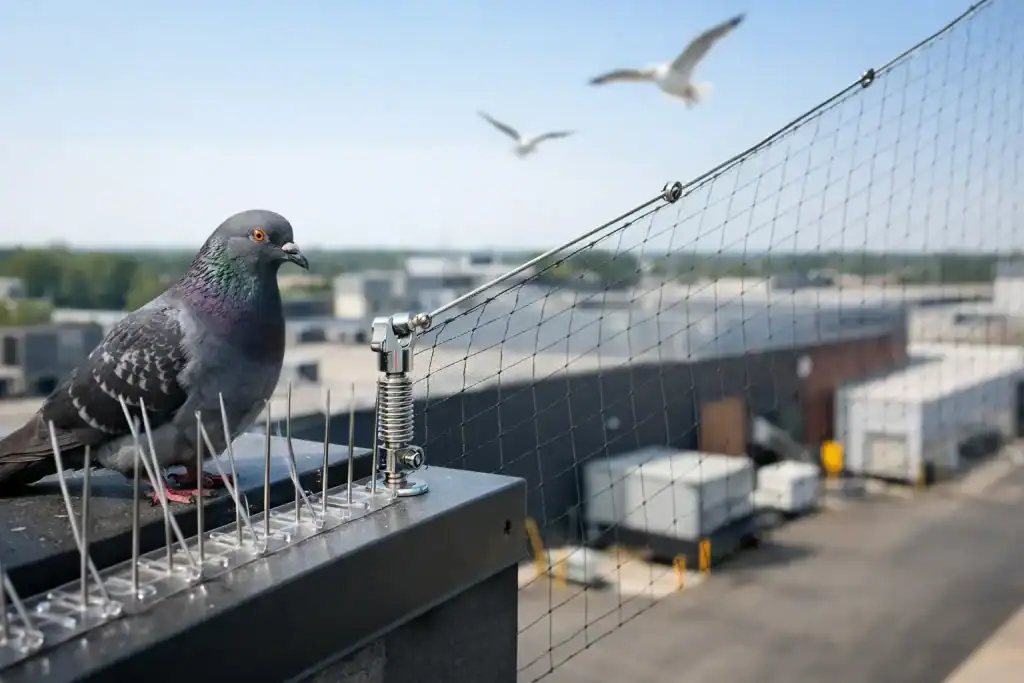
Bird netting can protect loading bays, plant rooms, roof voids, balconies, warehouse interiors and under-awning spaces. When professionally fitted and correctly tensioned, it creates a barrier that keeps birds out without trapping or injuring them.
Netting is especially useful where birds are nesting or roosting in a large open cavity. It needs to be selected and installed with care so it suits the location, remains secure in wind and does not interfere with building access, fire requirements or maintenance work.
Spikes, wire and perch modification
For narrow ledges, beams, signs, pipes and light fittings, discreet physical deterrents can make landing uncomfortable or impossible. Bird spikes and tensioned wire systems are often effective when they cover the full usable perch area.
These options work well where the bird problem is localised. They are less effective when installed in short sections while nearby ledges remain open. Birds will simply choose the easier landing spot. Good coverage, tidy installation and regular checks make the difference.
Managing food, rubbish and water
Deterrents work harder when a property is still offering an easy feed. Overflowing rubbish bins, unsecured food waste, outdoor eating areas and pet food can attract birds day after day. In hospitality settings, regular cleaning under tables and around bin areas is a simple but valuable part of prevention.
Water can be just as important. Leaking taps, blocked gutters and pooling around air-conditioning units may provide a reliable drinking source. Fixing these issues supports bird control and helps reduce other pest activity at the same time.
Visual and sound deterrents
Reflective devices, decoys and sound-based products may have a place as short-term support, but birds often become used to them. They should not be relied on as the main solution for an established roosting or nesting problem.
A balanced plan uses methods that create a lasting physical change to the site. Where visual measures are used, they are best treated as an extra layer while exclusion work and housekeeping address the reason birds were there in the first place.
Protecting food businesses, strata sites and workplaces
Commercial bird control needs to fit around daily operations. Food outlets may need work scheduled outside peak trading times, while strata buildings may require clear communication with residents and access coordination for balconies, common areas or rooftops.
For warehouses and factories, bird activity around loading docks can be difficult because roller doors open frequently. In these cases, the answer may involve a combination of netting, door management, screening and reducing food waste around the dock. It depends on how goods move through the site and whether birds are entering for food, shelter or both.
Property managers also need a clear record of the issue, the recommended works and any maintenance requirements. This helps with budgeting, communicating with owners or tenants, and showing that reasonable action has been taken to manage cleanliness and safety concerns.
What to expect from a responsible bird control service
A professional service should explain what is attracting the birds, which measures are recommended and why. You should know whether the work is designed to exclude birds, reduce food access, clean affected areas or monitor a recurring issue. Clear pricing and realistic expectations are important, especially where access equipment, roof work or staged installation is required.
Humane methods should be prioritised. Bird control is most effective when it prevents roosting and nesting opportunities rather than relying on harmful practices. Care is also needed around native birds, active nests and wildlife-safe installation. The aim is practical protection with minimal disruption to birds, staff, customers and residents.
After installation, occasional inspections can be worthwhile. Storms, building works and general wear may create gaps in netting or new perching opportunities. A quick repair is usually far easier than allowing birds to re-establish a roost.
Preventing birds from returning
Long-term prevention is a shared effort between the property owner and pest control provider. Keep rubbish areas clean and closed, remove standing water, maintain gutters, repair damaged cladding or screens, and address new nesting activity early. Staff should know who to notify when they see birds gathering in a new area, rather than waiting until droppings or damage become obvious.
For larger or complex sites, a tailored bird management plan can help prioritise the busiest areas first. This may mean protecting food handling zones and customer entrances immediately, then scheduling less urgent roofline or plant-room work as part of planned maintenance.
Clean & Green Pest Control takes a practical, wildlife-conscious approach to commercial bird concerns, helping businesses protect their premises without unnecessary chemical risk. The right solution is the one that suits your building, respects wildlife requirements and keeps the problem from becoming a regular maintenance headache.
When birds begin treating your premises as their permanent home, early action gives you more humane, affordable and effective options. A careful assessment now can keep your site cleaner, safer and more welcoming for the people who use it every day.