Hearing scratching in your roof at night?
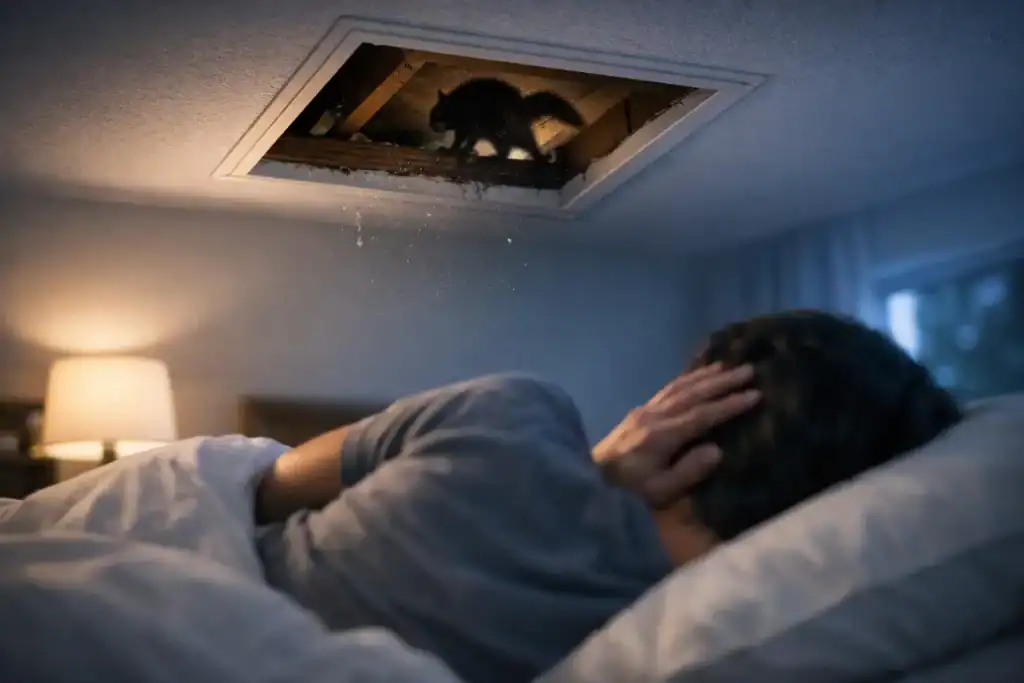
That sharp scratching above the ceiling at 2am is hard to ignore. If you’re hearing scratching in your roof at night, you may have rats or possums, and working out which one it is matters because the safest response can be very different.
In Sydney homes, especially around the Northern Beaches and leafy metro suburbs, both are common roof visitors. One is a pest that can breed quickly, contaminate insulation and wiring, and move through a property fast. The other is protected native wildlife that needs to be handled lawfully and humanely. The noise may sound similar from your bed, but the pattern, timing and other clues usually tell a clearer story.
Hearing scratching in your roof at night – rats or possums?
The first clue is the sound itself. Rats tend to make lighter, quicker scratching or scurrying sounds. It can seem erratic, like something darting between roof timbers, especially just after dark or before dawn. If there are several rats, the movement may sound busy rather than heavy.
Possums are usually louder and more deliberate. People often describe it as thumping, dragging, or slow, heavy footsteps across the ceiling. A possum can sound surprisingly large in a roof cavity, and the noise often follows a more predictable route as it enters, moves about, then settles.
Timing helps too. Rats may be active throughout the night and you might hear them in walls as well as the roof. Possums are strongly nocturnal, so the noise often starts not long after sunset when they leave their shelter, then returns later when they come back.
If the sound wakes you at the same time most nights and seems heavy enough to make you pause, a possum is a real possibility. If it’s frequent, fast and accompanied by faint gnawing or scratching in different parts of the house, rats are more likely.
Signs you may have rats in the roof
Rats rarely stay neatly in one place. If they are nesting in the roof, there are often other signs elsewhere around the home. You may notice droppings in the garage, pantry, subfloor or near pet food. There may be a musky odour, chewed packaging, gnaw marks on timber or cables, or greasy rub marks where they travel along beams and edges.
Roof rats are agile and can access homes by overhanging branches, power lines, fences and small gaps around eaves. Once inside, they breed quickly. A small noise problem can turn into a larger infestation if it’s left alone for too long.
Rats are not just unsettling. They can damage insulation, contaminate stored items, and create fire risk by chewing electrical wiring. For families, renters and property managers, that makes early action far more than a comfort issue.
Signs you may have a possum in the roof
Possums usually leave stronger visual clues outside the house. You might spot one on the fence, roofline or in nearby trees at dusk. You may also hear a cough, hiss, growl or shriek, which many people don’t realise can come from possums rather than birds or cats.
Inside the roof, possums often create a single regular nesting area rather than moving constantly through every part of the property. The sounds are heavier, and the entry point may be a broken tile, loose flashing, gap near the eaves or an opening around roofing joins.
Another giveaway is the type of mess. Possum droppings are larger than rat droppings, and the odour around an established nesting area can become quite strong. In some homes, staining appears on the ceiling if the issue has been ongoing.
This is where caution matters. In New South Wales, possums are protected native animals. You cannot legally trap, relocate or harm them without following strict rules, and blocking them out while they are still inside can leave you with an injured animal or a much bigger problem.
Why guessing can make the problem worse
A lot of people hear night noise and immediately buy bait or seal up the first gap they can find. That can work against you.
If the culprit is a possum, using the wrong method can be unlawful and inhumane. If it’s rats, sealing access points before the infestation is properly managed may trap them inside walls or force them deeper into the home. The same goes for DIY repellents. Strong smells, lights and noise devices often promise more than they deliver, especially once an animal has found a warm roof cavity that feels safe.
The better approach is to identify the pest first, then choose the treatment or exclusion method that fits. That’s safer for your household and usually more cost-effective than trying several quick fixes in a row.
What to do when you hear scratching in your roof at night
Start by paying attention to the pattern for a night or two. Is the movement quick and light, or heavy and slow? Is it only in the roof, or also in the walls? Does it begin just after sunset? These details help narrow it down.
Next, check outside during daylight. Look for overhanging tree branches touching the roof, gaps in eaves, damaged roof tiles, loose vents or openings around pipes and cables. You don’t need to climb onto the roof yourself. A ground-level inspection is enough to spot obvious access issues.
Inside the house, look for droppings, gnaw marks, unusual smells and signs in the pantry, garage or laundry. If you have pets, keep an eye on their behaviour too. Dogs and cats often notice rodent activity before people do.
Most importantly, avoid handling wildlife or applying random poisons in roof spaces. In homes with children and pets, that can create unnecessary risk. If there is a possum involved, it also raises animal welfare and legal concerns.
Safe treatment depends on the animal
For rats, professional control usually involves a combination of targeted treatment, locating entry points, and prevention advice to stop re-entry. The aim is not just to reduce the current activity, but to deal with why the roof became attractive in the first place.
For possums, the process is different. Humane removal and exclusion need to be timed properly, and entry points should only be sealed once the animal is confirmed out. In some cases, additional steps are needed to discourage re-entry without harming the possum.
This is one of those situations where eco-conscious pest management really matters. A blanket chemical response is not the best answer for every roof noise problem. The right result comes from matching the method to the pest while protecting the people, pets and wildlife around the property.
Preventing roof visitors from coming back
Long-term prevention is usually a mix of maintenance and habitat control. Trimming branches back from the roofline can make a big difference. So can repairing broken tiles, screening vents, sealing construction gaps and keeping food sources under control.
For rats, that might mean securing rubbish bins, storing pet food properly and reducing clutter in garages or subfloors. For possums, it often means identifying the exact access point and making the home less inviting once lawful exclusion has been completed.
Property managers and strata teams should take roof noise seriously, even if it seems minor. A fast inspection can prevent a straightforward issue from turning into damage complaints, hygiene concerns or repeated call-outs from residents.
When to call a professional
If the noise is happening more than once, if you can hear movement in walls, or if you’ve found droppings or damage, it is time to get it checked. The same applies if you suspect a possum but are not sure where it is entering or whether it has young in the roof.
A local team with experience in both rodent control and possum management can tell the difference quickly and recommend the safest next step. For Sydney households wanting family-safe, wildlife-conscious service, that means looking for pest professionals who understand both pest behaviour and the legal requirements around native animals.
At Clean & Green Pest Control, that practical, safety-first approach is central to how roof noise issues are handled. Clear identification, honest advice and environmentally responsible treatment help solve the problem without adding new risks to your home.
If something is scratching overhead tonight, trust your instincts and act early. The sooner you identify whether it’s rats or a possum, the easier it is to protect your roof, your sleep and the people and pets under it.