
How to Spot and Stop Drain Flies: The Hidden Causes You Never Knew

Did you know that drain flies can lay up to 300 eggs every 48 hours? A small problem can quickly become a full-blown drain fly infestation. These tiny, fuzzy insects make their home in slow or clogged drain systems and spots where stagnant water collects around your house. You might wonder why drain flies seem to appear out of nowhere. The answer lies in standing water, drain buildup, and high humidity levels that create perfect breeding conditions for these stubborn pests. Their lifespan stretches from two to three weeks, giving them plenty of time to multiply and spread through your bathroom or kitchen.
This piece will show you what drain flies look like, their origin points, and the most effective ways to kill drain flies. We have practical solutions that work, whether you’re battling drain fly larvae in your shower or mysterious flies around your sink. Let’s take a closer look at everything you should know about spotting and getting rid of these unwanted visitors!
What Do Drain Flies Look Like?
Drain flies are small and hard to spot, but identifying them correctly is vital for drain fly control to work. These unique insects have clear features that make them different from other household pests.
Size, color, and wing shape
These tiny insects measure between 1.5 to 5 mm in length (about 1/8 of an inch). Many people mistake them for tiny moths because of their fuzzy bodies. Their short, hairy bodies give them that distinctive “furry” appearance.
The color of drain flies changes among different species. Most have light gray or tan bodies with wings that are a bit lighter. Some appear brown, dark gray, or black. Their varied colors can make it tough to identify them if you don’t know what to look for.
The sort of thing I love about drain flies is their moth-like wings. These wings are big compared to their body and covered with fine hairs. Drain flies rest with their wings folded over their body like a roof. This moth-like pose makes them easy to spot.
These insects have six legs and long antennae that stretch beyond their body length. Their middle segment looks large compared to their size. Despite having wings, they don’t fly well. They move in short, jerky paths of about a meter. You’ll usually see them sitting on bathroom or kitchen walls instead of flying around.
How they differ from fruit flies and gnats
People often mix up drain flies with other small flying insects at home, but they look quite different.
Compared to fruit flies, drain flies:
- Look fuzzy and moth-like, not smooth like fruit flies
- Come in gray or tan colors, while fruit flies are usually yellow or tan
- Have hairy, leaf-shaped wings, not the clear wings that fruit flies have
- Move in short hops instead of flying directly like fruit flies
Next to fungus gnats, drain flies:
- Show a moth-like shape rather than a mosquito-like look
- Have fuzzy bodies, unlike gnats’ sleek appearance
- Look lighter (gray/tan vs. black/brown)
- Rest with wings folded like a roof
Scientists have found about 4,000 species of these insects worldwide. People call them by different names: moth flies (most accurate), sink flies, filter flies, sewer flies, or sewer gnats.
Learning these features helps you quickly tell if you have drain flies or other small flying insects in your home. This knowledge becomes the first vital step to fix your pest problem.
What Causes Drain Flies in Your Home
Drain flies don’t just randomly show up in your home. These pests show up when they find the perfect breeding spots. You need to understand why it happens to fix the problem properly, not just treat what you see.
Standing water and organic buildup
Drain flies love places with standing water and rotting organic matter. They lay eggs in the slimy film that builds up where water sits still. This film contains hair, soap scum, food bits, and other gunk that piles up. The buildup gives drain flies both food and a place to breed.
These spots catch their attention because they’re rich in organic material. Kitchen waste, oils, fats, and food leftovers stuck in drains create a nutrient-rich environment where drain fly larvae can grow. The wet, organic conditions give these pests everything they need to grow and multiply.
Clogged or slow drains
Drains that move slowly or get partially blocked create the perfect setup for drain flies. Water that can’t flow freely creates spots where organic matter gets stuck. These spots become breeding grounds quickly.
You’ll see this problem most often in:
- Kitchen sinks full of food bits and grease
- Shower drains packed with hair and soap
- Floor drains that stay wet and collect debris
- Soda fountain drains in commercial settings
Old plumbing made of cast-iron or galvanized steel tends to have more drain fly issues. These pipes can rust and create rough spots where slime sticks easily. This gives drain flies more places to breed.
Leaky pipes and high humidity
Drain flies thrive in the moisture from leaking pipes. Small leaks under sinks or behind walls provide enough dampness for them to breed. You might not notice the problem until you see flies buzzing around.
Summer’s high humidity makes drain fly problems worse. Humid air keeps drains and plumbing fixtures wet longer, which these insects love. Poor ventilation makes things worse by trapping moisture. Using dehumidifiers can help control drain flies by reducing overall humidity levels in problem areas.
Rarely used sinks or toilets
Drain flies often pop up in plumbing fixtures nobody uses much. Guest bathrooms, basement sinks, floor drains, and toilets that rarely get flushed become their favorite spots. The water in these traps sits still and gets stagnant.
Drains that sit unused let their P-trap water partly evaporate. This leaves behind just enough moisture and organic matter for drain flies to breed. People often forget about overflow drains and AC unit lines during cleaning. These spots become perfect hiding places.
Homeowners usually spot drain fly problems after coming back from vacation. Empty houses with unused drains create the perfect breeding conditions. Regular cleaning of all drains matters a lot, especially the ones you rarely use. This helps keep these stubborn pests from making your home their home.
How to Tell If Drain Flies Are in Your Drains
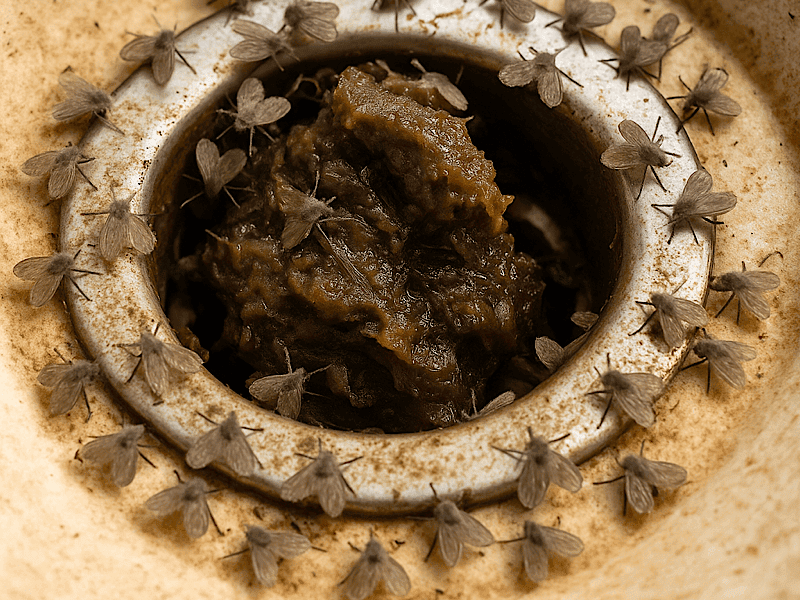
Finding drain flies in your bathroom doesn’t always mean they breed in your drains. You need to find their exact source to get rid of these pests. Here are some reliable ways to check if your drains host these unwanted visitors.
Visual signs around sinks and showers
Look for adult drain flies on bathroom walls, ceilings, or near drain openings. These insects don’t fly well. They make short, hopping movements when you disturb them. During the day, you’ll spot them resting on walls close to their breeding spots.
These pests become more active at night and gather around lights while they feed and breed. A musty smell from your drains might point to organic buildup where drain flies thrive.
Get a flashlight and look inside your drains. Search for slimy, gelatinous biofilm coating the pipe’s interior – drain flies lay eggs here and their larvae feed on it. Bad infestations might show visible larvae with dark heads moving in this slime.
The tape test method
The tape test, also known as the duct tape test, gives you the most reliable way to confirm if drain flies come from a specific drain. Here’s what you should do:
- Cut a piece of clear adhesive tape or duct tape
- Cover the drain opening completely with the sticky side down
- Keep the tape there overnight when drain flies are most active
- Check for trapped flies the next morning
Flies stuck to the tape’s underside confirm that drain as a breeding site. Run this test for several nights in a row because drain flies might not emerge every night. This method works best with drains you won’t use overnight.
Using a clear cup trap
The clear cup trap offers a great alternative to the tape test for drains that need to stay available:
Put a thin coating of vegetable oil or petroleum jelly inside a clear plastic cup and place it upside down over the suspected drain. The cup must be see-through to spot any emerging flies. Leave it there for 2-3 days and check it now and then. This trap helps identify breeding sites and catches adult flies at the same time. It works best with floor drains and fixtures you rarely use.
Running water or garbage disposal test
Kitchen sinks with garbage disposals need a simple test to reveal drain flies:
Run the garbage disposal briefly or wave your hand over the drain. Drain flies hiding inside will fly out from the vibration and air movement.
Hot water down suspected drains can also flush out adult flies. Sooner or later, flies will come out if they live there.
Note that drain flies love drains you don’t use often. Guest bathrooms, basement sinks, and floor drains need extra attention during your search. Without doubt, finding the exact breeding sites is vital before treatment starts. The wrong drain won’t solve your pest problem.
How to Get Rid of Drain Flies
Now that you know what causes drain flies, you can get rid of them using several proven methods. These techniques target everything in the infestation, from breeding sites to adult flies.
Boiling water and drain brushing
Boiling water down affected drains is one of the simplest home remedies that works to curb drain flies. You should pour at least one full kettle down the drain 1-2 times daily for about a week. This kills drain fly larvae and helps flush away their breeding material. A pipe brush can scrub inside the drain before the boiling water treatment and dislodge the biofilm where drain flies breed.
Baking soda and vinegar method
This powerful mix creates a natural drain cleaning reaction that breaks down organic matter. Here’s how to do it:
- Pour half a cup of baking soda down the drain
- Follow with half a cup of salt
- Add one cup of white vinegar
- Let the mixture foam and sit overnight
- Flush with boiling water in the morning
The chemical reaction kills drain flies and removes grime and grease that serves as their breeding ground.
Apple cider vinegar trap
You can catch adult drain flies with a simple trap using apple cider vinegar in a small container. Cover it with plastic wrap, punch small holes in the top, and place near infested drains. Another option mixes sugar, water, vinegar, and a few drops of dish soap in a bowl. The sweetness draws the flies, and the soap traps them so they can’t escape.
Using biological drain cleaners
Professional-grade microbial drain cleaners contain good bacteria that break down organic material where drain flies breed. Products like InVade Bio Drain use enzymatic action to digest proteins, fats, and carbohydrates in drain biofilm. The package directions usually suggest daily treatment for 5-7 days at the time of first use, then maintenance doses every 1-2 weeks.
Removing food and water sources
The drain flies’ environment needs attention too:
- Fix leaky pipes right away to prevent plumbing issues
- Keep food waste out of drains
- Cover sink and shower drains when not used
- Clean condensation pans and garbage disposals often
When to ask for professional help
Your drain fly problem needs professional pest control attention if it lasts more than 20 days despite your efforts. Plumbers can spot hidden issues like broken pipes or contaminated soil beneath floors. They also have specialized tools like water jetters that clean pipes deeply and remove stubborn biofilm that DIY methods can’t reach. Professional cleaning services may use commercial drain cleaners or insect growth regulators for more effective drain fly control.
How to Prevent Drain Flies from Coming Back
You need to keep drain flies from coming back after getting rid of them. These stubborn pests will return quickly if they find suitable conditions. These preventive steps will help keep your home free from drain flies for good.
Regular drain maintenance
A consistent cleaning schedule for all drains should be your top priority. Weekly pouring of boiling water down drains will dissolve organic buildup where drain flies breed. A wire brush or plumber’s snake can help you remove debris from pipes monthly. Enzymatic cleaners made for drains will break down the biofilm that draws drain flies. Professional drain cleaning services can reach spots that DIY methods don’t deal very well with.
Fixing leaks and improving ventilation
Fix any plumbing leaks right away to remove moisture sources that attract drain flies. Look under sinks, around toilets, and check floor drains often for water damage signs. Good ventilation in bathrooms and kitchens reduces humidity levels and makes these areas less welcoming to drain flies. Your sump pumps should work properly, condensation pans need regular emptying, and high-moisture areas throughout your home need attention.
Avoiding food waste in drains
Clean dishes well before washing to stop food particles from going down drains. Of course, keep these items away from drains:
- Starchy foods (pasta, rice, potato peels) that turn gooey
- Coffee grounds and eggshells
- Oils, fats, and grease that harden in pipes
- Fruit and vegetable pulp
Small food particles can create perfect breeding spots for drain flies. Sink strainers help catch debris before it reaches pipes.
Using drain covers
Put drain covers or stoppers on all drains during idle times. These basic devices block drain flies from getting into pipes while water flows through. Drain covers also trap hair and debris that could clog pipes. Specialized drain protectors with perforated strainers work best for commercial floors or bin wash stations to keep solids from entering the sewer.
Health Implications of Drain Flies
While drain flies are primarily a nuisance, it’s important to address the question: do drain flies bite? Generally, drain flies do not bite humans. However, their presence can indicate unsanitary conditions that may have broader health implications.
Drain flies themselves are not typically harmful to human health, but the environments they thrive in can be. The organic matter and bacteria in clogged drains that attract these pests can potentially harbor harmful microorganisms. While direct disease transmission from drain flies is rare, their presence suggests conditions that could support the growth of harmful bacteria or mold.
In some cases, prolonged exposure to large numbers of drain flies and their breeding sites may cause allergic reactions in sensitive individuals. Symptoms might include respiratory irritation or skin rashes. Therefore, while drain flies are not directly harmful, addressing an infestation promptly is important for maintaining a healthy living environment.
Conclusion
Drain flies might look harmless at first, but these stubborn pests can quickly turn into a big problem. In this piece, we’ve gotten into their unique looks, breeding patterns, and what makes them show up in your home. On top of that, we’ve looked at ways to spot where these pests come from.
You can get drain flies under control because you have many budget-friendly options. Basic home remedies like boiling water, baking soda-vinegar mixes, and DIY traps work great for small problems. Most homeowners can handle these pests without calling professionals. But if these unwanted guests stick around for more than three weeks, you might need expert help from professional pest management services.
The quickest way to stop future drain fly problems is prevention. Clean drains regularly, fix leaky pipes right away, and throw away food waste properly to create an environment where these insects can’t survive. Without doubt, if you stay consistent, you’ll break their life cycle for good.
The biggest problem isn’t just killing adult flies – you need to tackle what’s causing them. Biofilm builds up inside drains and gives larvae food and shelter, so a full cleaning is crucial. Keep your drains clean and flowing, and these fuzzy pests will become nothing but a memory instead of regular visitors.
Now you have everything you need to spot, eliminate, and stop drain flies from taking over your home. These hands-on strategies will help you keep your drains pest-free and your living space healthier for years to come.
FAQs
What do drain flies look like and how can I identify them?
Drain flies are tiny, moth-like insects measuring about 1/8 of an inch long. They have fuzzy bodies that are gray or tan, with moth-like wings that fold over their bodies when at rest. Unlike fruit flies, they move in short, hopping flights and are often found resting on bathroom or kitchen walls.
What causes drain flies to appear in my home?
Drain flies are attracted to moist environments with organic buildup. They commonly appear due to standing water, clogged drains, leaky pipes, high humidity, and rarely used plumbing fixtures. These conditions create the perfect breeding ground for drain flies in your bathroom or kitchen.
How can I test if drain flies are coming from my drains?
A simple way to test for drain flies is the tape test or duct tape test. Cover the drain opening with clear adhesive tape overnight and check for trapped flies in the morning. Alternatively, you can use a clear cup trap lined with vegetable oil or perform a disturbance test by running water or the garbage disposal.
What are some effective methods to get rid of drain flies?
To eliminate drain flies, you can use a combination of methods including pouring boiling water down the drain, using a baking soda and vinegar mixture, setting up apple cider vinegar traps, and applying biological drain cleaners. For persistent infestations, professional pest control may be necessary.
How can I prevent drain flies from returning?
Prevent drain flies by maintaining clean drains through regular cleaning and flushing with boiling water. Fix any plumbing issues promptly, improve ventilation in bathrooms and kitchens, avoid putting food waste down drains, and use drain covers when fixtures are not in use. Consider using dehumidifiers in high-moisture areas. Consistent preventive measures, including periodic deep cleaning and commercial cleaning for severe cases, will help keep your home drain fly-free.